Some links on this page are affiliate links: if you book through them, we may earn a commission at no extra cost to you. How this works
The Dom Luís I Bridge is two bridges in one frame, and the commonest mistake is to cross only one of them. The upper deck runs from the hill of the cathedral to the heights of Gaia, with the metro on it and the whole of the Ribeira below. The lower deck joins the two quays at water level. Each gives a different city.
The bridge is iron, 395 m long, and was inaugurated on 31 October 1886. It was designed by Théophile Seyrig, and not, as is often said, by Gustave Eiffel. It belongs to the UNESCO World Heritage listing of the historic centre, and it is rated 4.8 out of 5 from 98,133 reviews, in which the words that recur are the views.
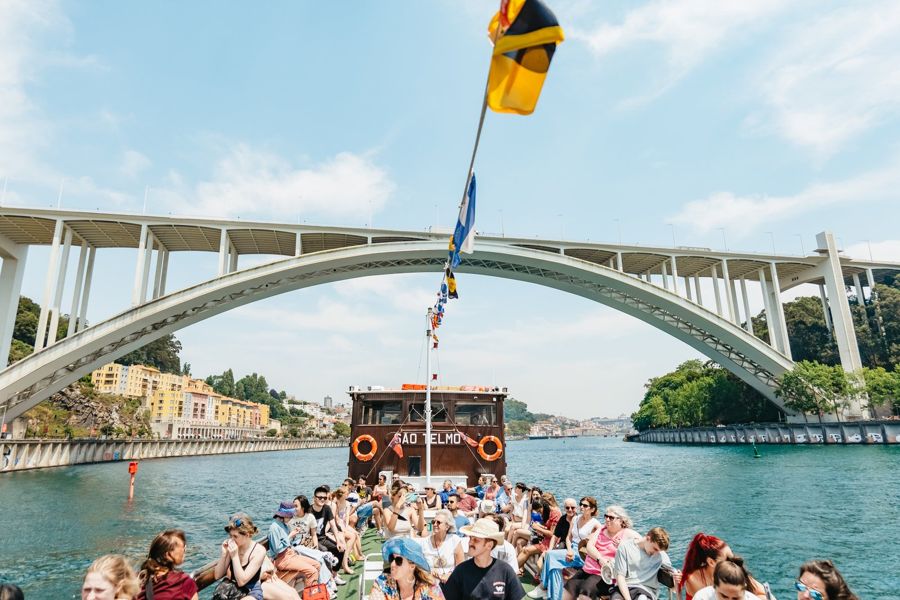
Two 50-minute cruises that pass under the bridge and the five others.
 Most reviewed
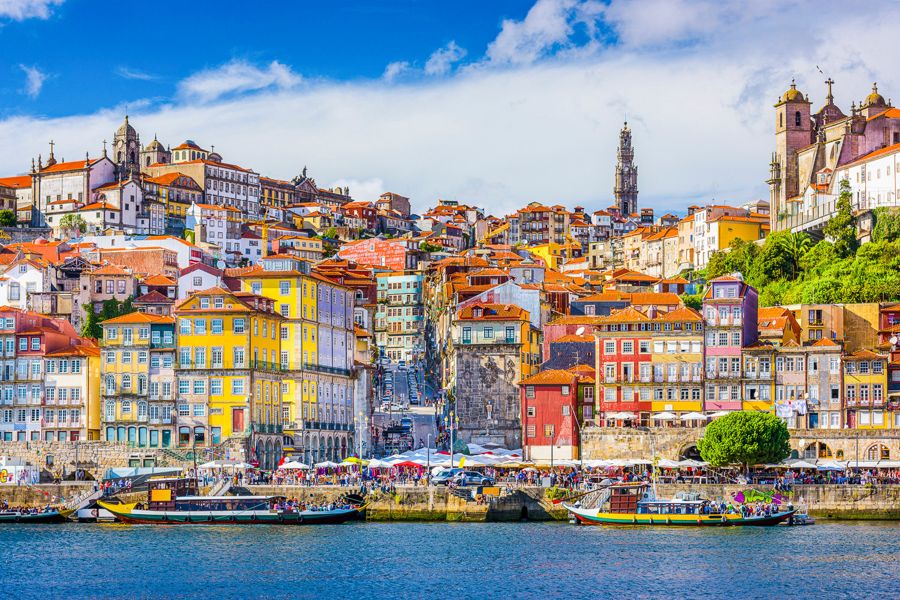
Porto: Six Bridges Cruise
The classic cruise under the six bridges, the most reviewed
 Higher rated
Two decks on one arch
The mistake is to think of the decks as an upstairs and a downstairs of equal length. The Ponte Luís I, as it is called in Portuguese, carries both on a single iron arch, and they are very different in size. The upper deck runs about 391 m between its abutments. The lower one, down by the quays, is about 174 m. The structure is 8 m wide and weighs 3,045 tonnes in all.
It was built between 1881 and 1886 to replace a suspension bridge that stood on the same spot. The upper deck opened with the inauguration in 1886, and the lower deck was finished only in 1888. Until 2017 its arch was counted the largest wrought-iron arch in the world.
The two decks do different work today. The upper carries line D of the metro between the cathedral side of Porto and the Jardim do Morro and Avenida da República in Gaia. The lower carries people on foot, buses, taxis and bicycles, and thousands cross it every day.
What visitors take away is the outlook more than the ironwork. In their reviews the commonest phrases are about spectacular views and city views, and the iron bridge itself comes third.
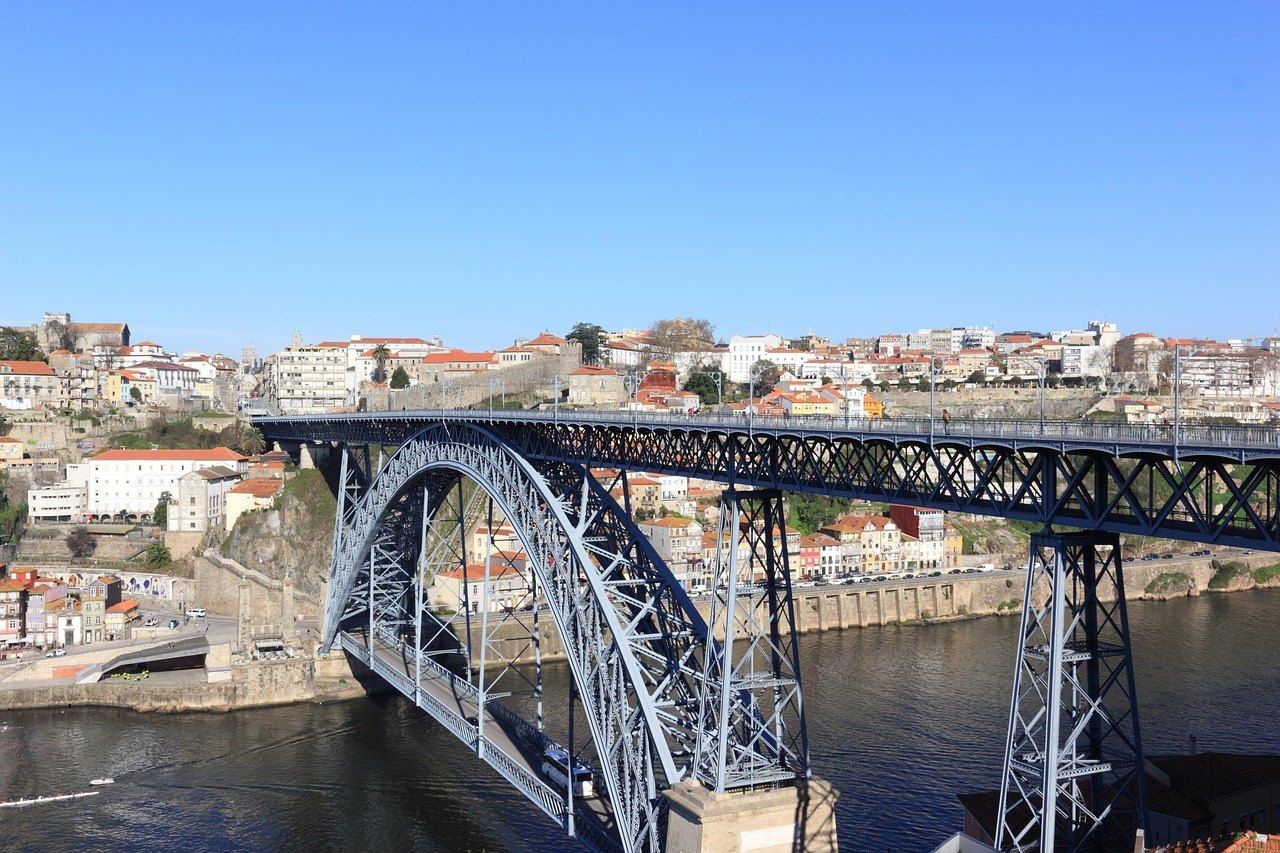 One iron arch, two decks, 395 m from end to end.
Seyrig, not Eiffel
The mistake is to repeat the name on every postcard. The Porto bridge Eiffel is credited with was not his. Its designer was François Gustave Théophile Seyrig, who had been Eiffel's business partner, and he drew it for a Belgian firm, the Société Willebroeck.
The confusion has a cause close by. The Maria Pia railway bridge, inaugurated on 4 November 1877, was designed by Eiffel and Seyrig together, and on the day it opened it had the largest iron arch in the world. Nine years later Seyrig, now working without Eiffel, built the larger road bridge that the city is known for.
So Porto has one bridge by Eiffel's company and one by his former partner. The owner of both, Infraestruturas de Portugal, sets out the history on its page for the Luiz I bridge.
The two decks compared
| Upper deck | Lower deck | |
|---|---|---|
| Length | About 391 m | About 174 m |
| Opened | 1886 | 1888 |
| Carries | Metro line D and walkers | Walkers, buses, taxis, bicycles |
| Porto end | The cathedral side | The Ribeira quay |
| Gaia end | Jardim do Morro | The quay of the Port lodges |
- Upper deck
- About 391 m
- Lower deck
- About 174 m
- Upper deck
- 1886
- Lower deck
- 1888
- Upper deck
- Metro line D and walkers
- Lower deck
- Walkers, buses, taxis, bicycles
- Upper deck
- The cathedral side
- Lower deck
- The Ribeira quay
- Upper deck
- Jardim do Morro
- Lower deck
- The quay of the Port lodges
Walking it
The mistake is to cross on one deck and come back on the same one. A good Porto bridge walk is a loop: out on one level and back on the other.
Start from the cathedral, which is 350 m from the upper deck, about six minutes on foot. Cross on top. At the far end the Jardim do Morro is 294 m from the bridge and open at all hours, and the viewpoint of the Serra do Pilar is 127 m beyond the garden. From there the view runs back across the river to the Ribeira.
Come down to the Gaia quay by the cable car, which runs between the garden and the riverside, or on foot. Walk back across the lower deck among the cyclists and the buses. On the Porto side the Ribeira quay at Cais da Estiva is 394 m from the bridge, about six minutes.
The lower deck was fully rehabilitated by its owner in works that ended in March 2023, which strengthened it and reduced the swaying that large crowds used to cause on festival nights. The same works doubled the load it can take: vehicles of up to 60 tonnes may now cross, where the limit had been 30.
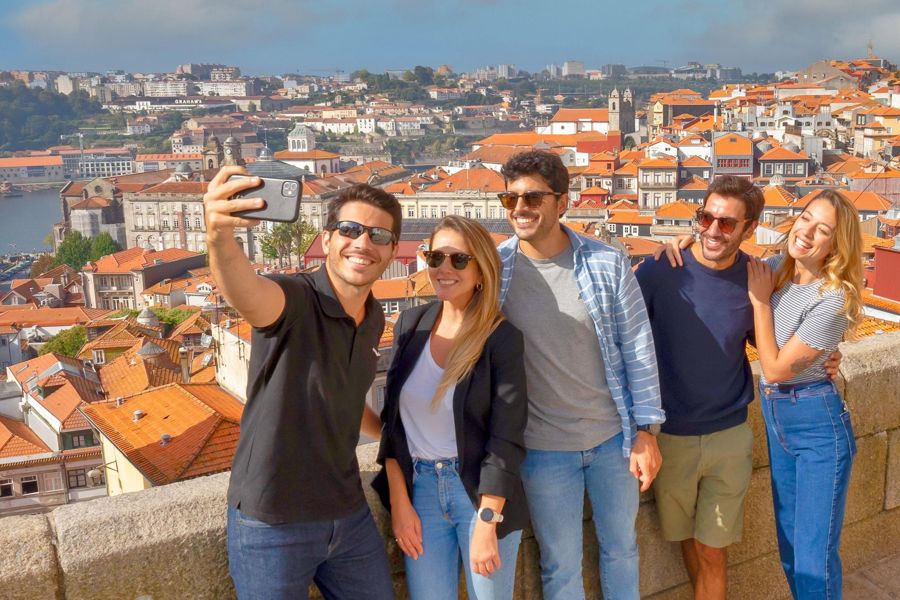
Porto: Walking Tour, Lello Bookshop, Boat and Cable Car
★ 4.7 · 1,188 reviewsA four-hour guided walk that adds Livraria Lello, a boat trip and the Gaia cable car.
The other five
The mistake is to think the city has one bridge worth knowing. The six bridges of Porto span more than a century of engineering on one river. Going by date: the Maria Pia railway bridge of 1877, the Dom Luís I of 1886, the Arrábida of 1963, designed by Edgar Cardoso, the São João of 1991, the Freixo of 1995 and the Infante Dom Henrique of 2003.
The way to see them together is from the water. A cruise under all six takes about 50 minutes, and eleven such cruises are on sale, with 28,175 reviews between them. The river cruises page compares the boats.
Before any of these there was the suspension bridge of 1843, on the spot where the Dom Luís I now stands.
- Inaugurated
- 31 October 1886
- Designer
- Théophile Seyrig
- Length
- 395 m
- Width
- 8 m
- Weight
- 3,045 tonnes
- Visitor rating
- 4.8 out of 5 from 98,133 reviews
What stands at each end
The mistake is to treat the bridge as a crossing and nothing more. Each of its four ends leads somewhere worth an hour.
On the Porto side, the upper deck lands by the cathedral and the lower deck on the Ribeira. On the Gaia side, the upper deck lands at the Jardim do Morro, where metro line D stops and the cable car has its top station, and the lower deck lands on the quay where the Port lodges are. The page on Vila Nova de Gaia covers the lodges and the far bank.
The bridge and the Serra do Pilar monastery above its Gaia end are both named in the World Heritage listing, which UNESCO describes on its page for the historic centre.
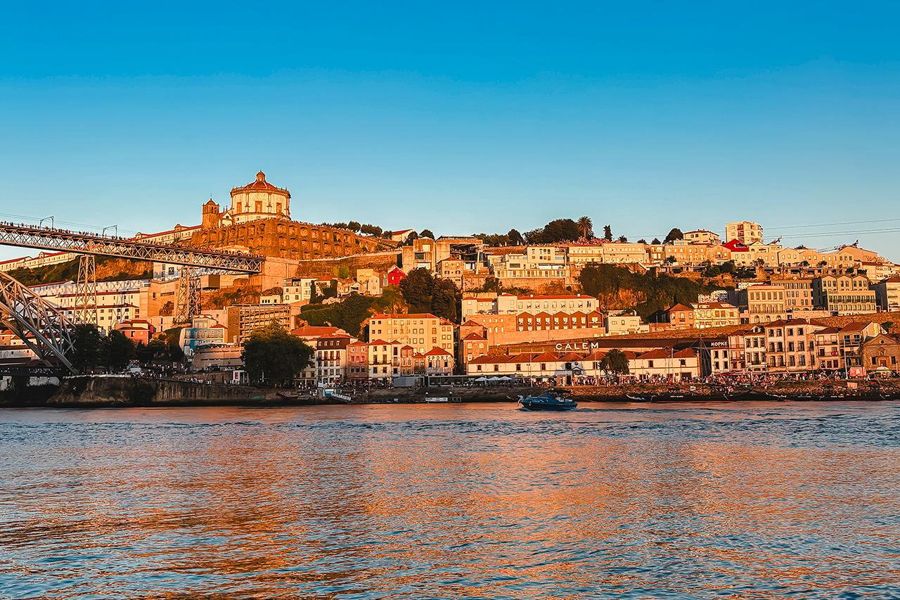
Porto: Six Bridges Cruise & Sunset & Port Wine Cellar Option
★ 4.1 · 5,075 reviewsThe six bridges cruise with a sunset departure and an optional Port wine cellar visit.
Common questions
Did Gustave Eiffel build the Dom Luís I Bridge?
No. It was designed by Théophile Seyrig, Eiffel's former partner, for the Belgian Société Willebroeck. Eiffel and Seyrig together designed the Maria Pia railway bridge nearby, opened in 1877.
Can you walk across the Dom Luís I Bridge?
Yes, on both decks. The upper deck is shared with metro line D and the lower with buses, taxis and bicycles.
How long is the Dom Luís I Bridge?
395 m in all. The upper deck is about 391 m and the lower about 174 m.
When was the Dom Luís I Bridge built?
Between 1881 and 1886. It was inaugurated on 31 October 1886, and the lower deck was finished in 1888.