Some links on this page are affiliate links: if you book through them, we may earn a commission at no extra cost to you. How this works
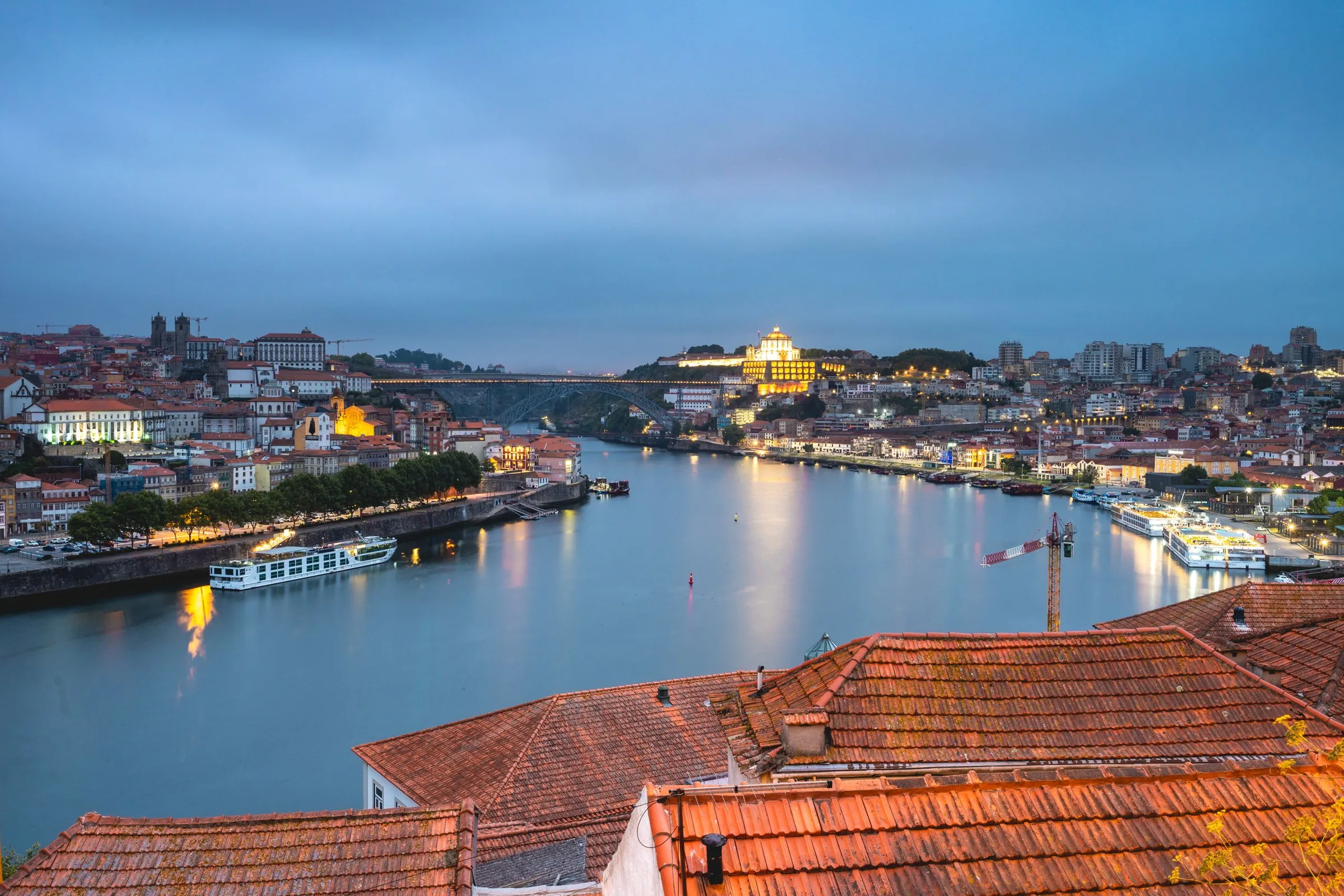
Porto is a compact city, and the choice of neighbourhood still changes a trip more than most travellers expect. The same few kilometres hold a steep medieval riverfront, a granite downtown built for banks and celebrations, an arts quarter, a residential east side, a riverside of museums, a modern avenue of concert halls and offices, a seaside district at the river mouth, and, across the bridge, a separate city of Port wine lodges.
This overview sets them side by side: what each one is, what is within a short walk, what a room cost there in mid-October 2026, and how it connects to the rest of the city. The detail, with the places, restaurants and history, is on each area's own page. For a first short visit, the choice usually comes down to the Ribeira or the Baixa; for a second visit or a longer stay, the quieter quarters around them come into their own.
Two ways to see several neighbourhoods in one outing, with a guide and without the climbs on foot.
 Private
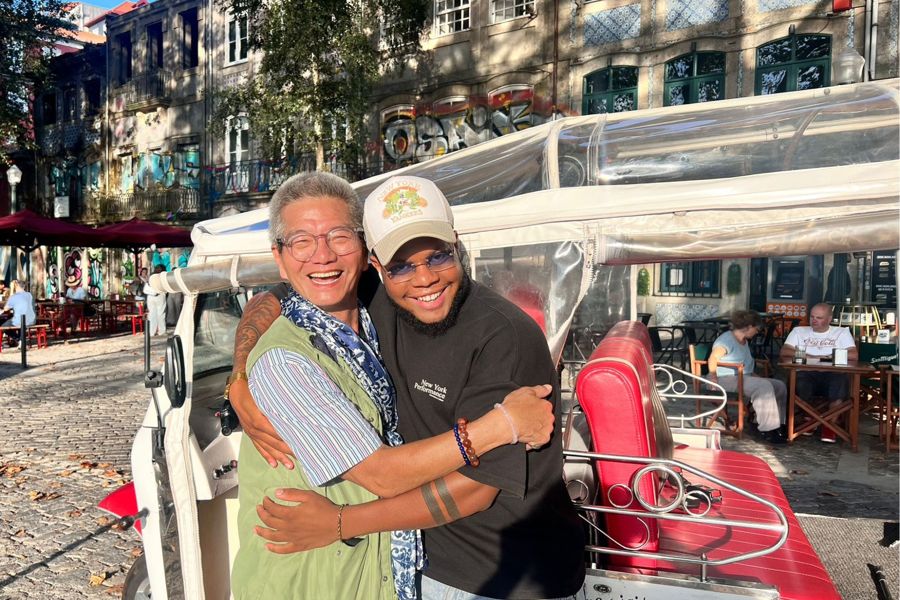
Porto Private Tuk Tuk Tour: City Highlights
A private tour linking the old town with the districts further out
 Segway
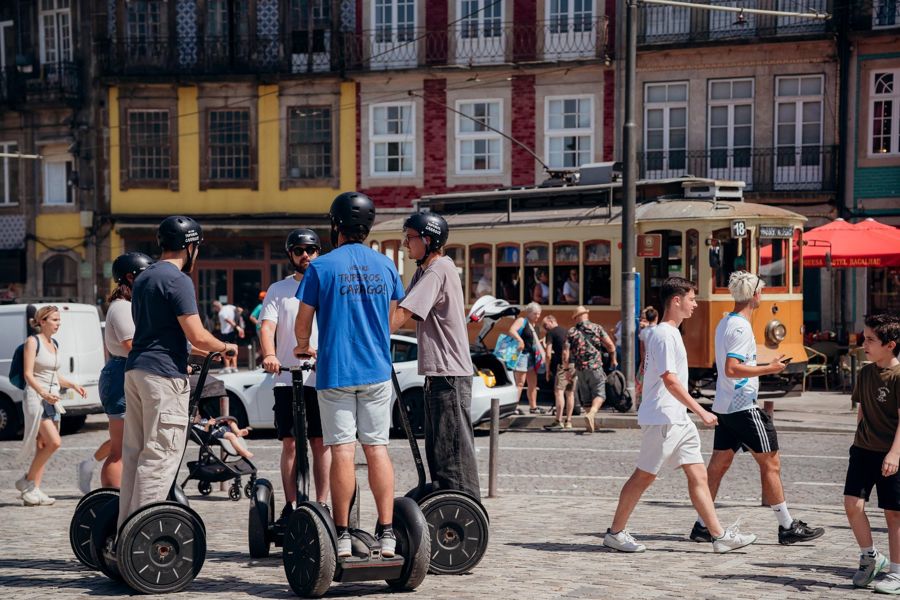
Porto: City Highlights Guided Segway Tour
The historic centre's highlights in two hours
The old centre: Ribeira and Baixa
The common mistake is to treat the old centre as one place. It is two, one above the other, and they suit different travellers.
The Ribeira is the riverfront at the foot of the cathedral hill, settled since Roman times and the heart of the UNESCO-listed old town. A walk of a few minutes from its square reaches 20 monuments, 19 museums and churches and four viewpoints, the Luís I bridge among them. It is steep and busy, and its rooms are the most expensive of the central areas: its median lowest room rate on the October 2026 test dates was about 182 euros.
The Baixa is the downtown above it, around the Avenida dos Aliados, built from 1916 as a civic centre. Within 650 m of the Aliados there are 24 monuments, 17 museums and churches, and 108 restaurants, and more than 460 places to stay, at a median of about 144 euros. Four metro stations serve it, including Trindade on the airport line.
The two are about 1 km apart, much of it uphill from the river. Guests rate the location of both highly, 9.7 out of 10 in the Ribeira and 9.5 in the Baixa.
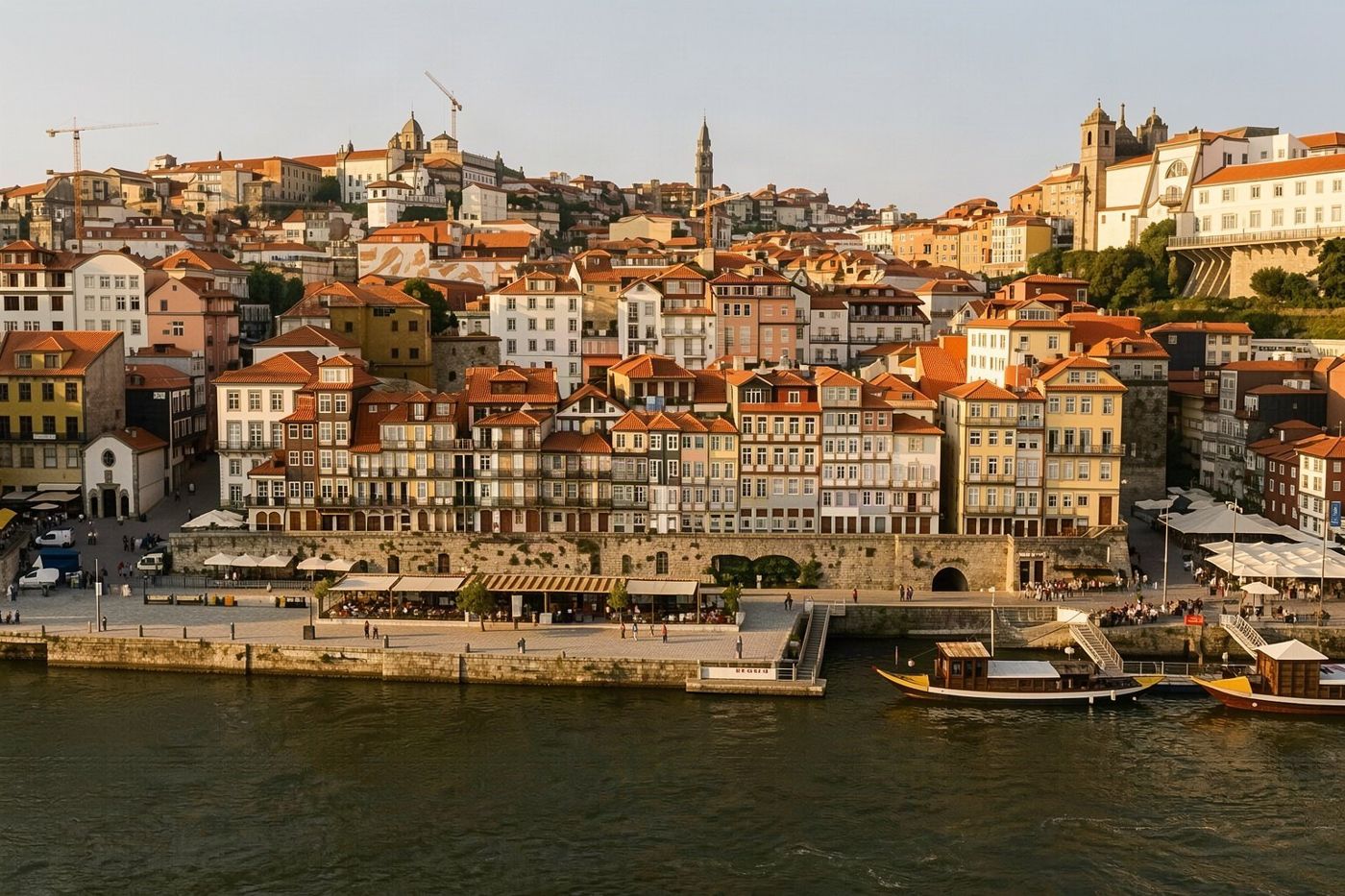 The old centre is two places, not one, and they suit different travellers.
West of the centre: Cedofeita and the riverside
The mistake is to think everything worth seeing is inside the old walls. Two quarters just west of the centre repay the short walk.
Cedofeita, about 1 km west of the Aliados, is the arts quarter. Its spine is the Rua de Miguel Bombarda, a 650 m street of contemporary galleries that have held joint openings six times a year since 2007. Its Romanesque parish church is thought to be the oldest in Porto. There are 36 well-reviewed restaurants within 600 m of the gallery street, and the median cheapest room was about 142 euros a night.
Below it, on the river, lie Miragaia and Massarelos, the old fishing and merchant quarters west of the Ribeira. Fourteen museums lie within a short walk, including the Soares dos Reis National Museum, the oldest public art museum in Portugal, and the gardens of the Palácio de Cristal, rated 4.6 from 48,707 reviews. Rooms had a median of about 147 euros, with several five-star hotels.
Both suit travellers who have seen the main sights, or who prefer museums, galleries and gardens to crowds. Many of their museums and restaurants close on Mondays.
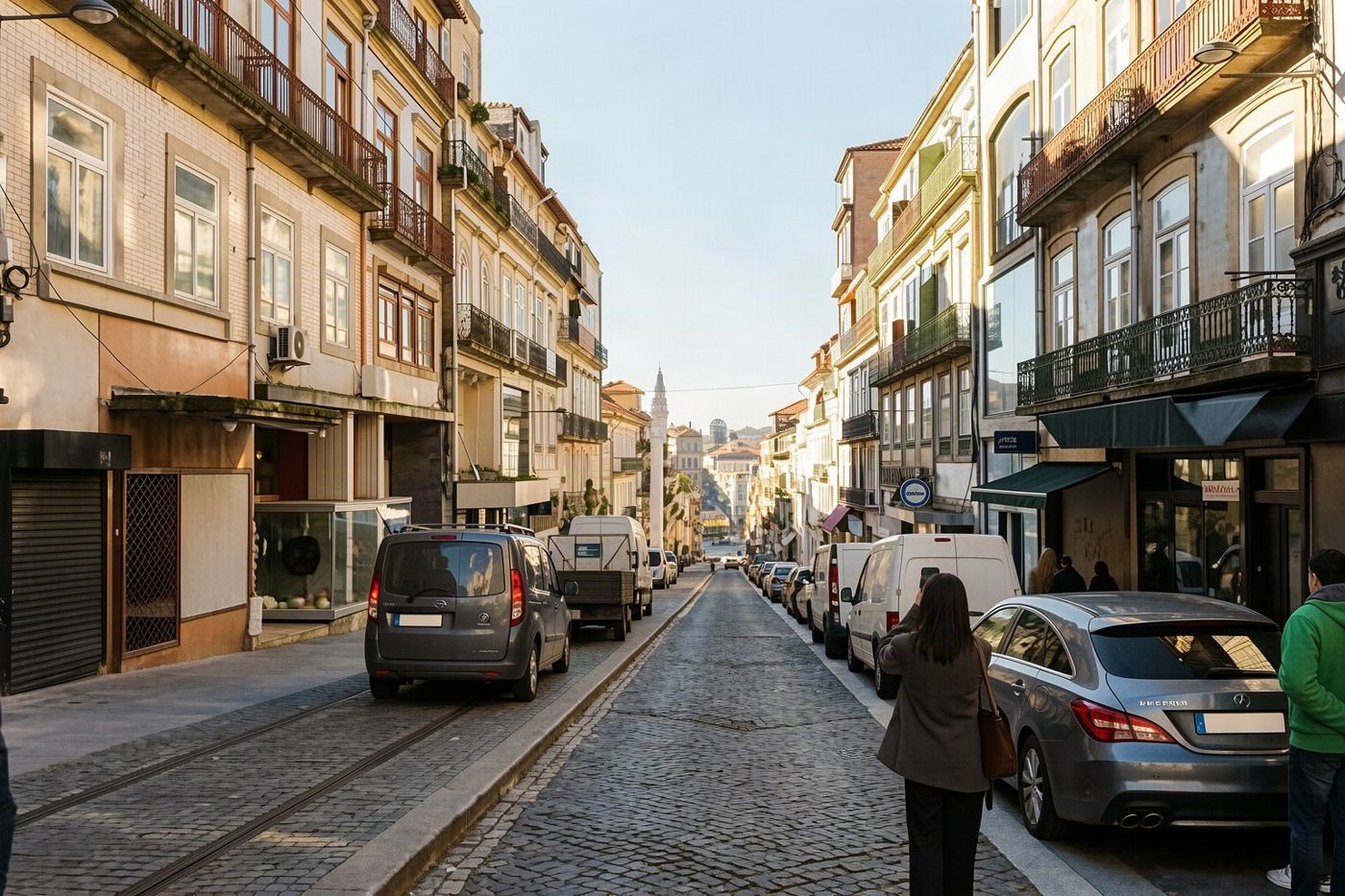 Two quarters west of the walls repay the short walk.
East of the centre: Bonfim
The mistake is to rule out the east side because it has few monuments. For many travellers, that is the reason to stay there.
Bonfim starts at the eastern edge of the Baixa; its hub, the Campo 24 de Agosto, is some 1.3 km from the Aliados. It was an industrial parish, and today it is a residential quarter of about 23,000 people, with commerce and services where the factories were.
Its strength is food and price. Nearly a hundred restaurants cluster around its central square, and on the October 2026 test dates its median lowest room rate, about 127 euros, came in ten euros under the city's.
It has its own landmarks too: the Fontainhas viewpoint above the Douro, rated 4.7 from 2,653 reviews, the Military Museum of Porto with its 16,000 miniature soldiers, and the Prado do Repouso, Porto's earliest public cemetery, from 1839.
Most of its listings are closest to the Campo 24 de Agosto metro stop, and the Aliados is about twenty minutes away on foot.
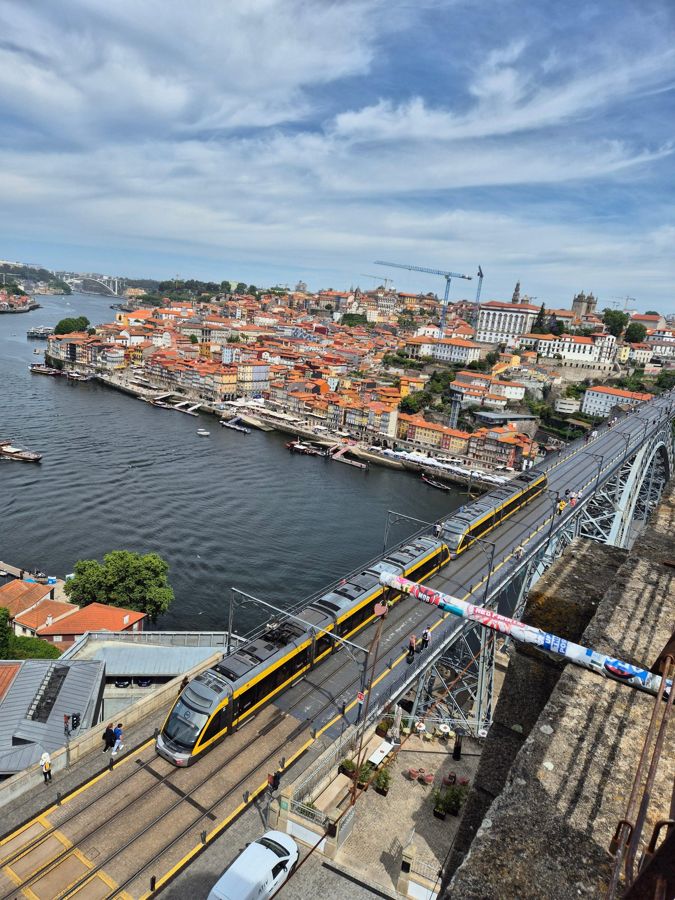
Porto: City Highlights 3-Hour Guided Electric Bike Tour
★ 4.8 · 3,688 reviewsA three-hour guided e-bike tour of the city highlights, covering more ground than a day on foot.
Further out: Boavista and Foz do Douro
The mistake is to judge the west by distance alone. Its two districts are further from the monuments and closer to other things.
Boavista is not a parish but the area along the city's longest avenue, around the Rotunda about 2 km west of the Aliados. It holds the Casa da Música, Rem Koolhaas's 2005 concert hall, the botanical garden, and, about 2.3 km further west, Serralves. The avenue continues some 5.5 km to the ocean, and the blue line A of the metro stops at the concert hall.
Foz do Douro, about 5 km west of the Aliados, is where the Douro meets the Atlantic. Independent until 1836, it is known for its promenade and its well-off residents, and it holds northern Portugal's earliest Renaissance architecture and the Passeio Alegre garden, rated 4.6 from 14,875 reviews. Tram 1 reaches it along the Douro from Infante in roughly twenty minutes.
Both suit a second visit, a stay built around concerts, Serralves or the sea, or travellers who want a quieter base and do not mind the ride into the old town.
- Ribeira
- Riverfront, steepest, about 182 EUR a night
- Baixa
- Downtown, most choice, about 144 EUR
- Cedofeita
- Galleries and restaurants, about 142 EUR
- Bonfim
- Residential east, about 127 EUR
- Miragaia and Massarelos
- Museums and gardens, about 147 EUR
- Boavista, Foz, Gaia
- Concerts, the sea, the lodges
Across the river: Vila Nova de Gaia
The mistake is to count Gaia as a Porto neighbourhood. It is a separate city and municipality, with 304,149 residents in 2021, and its riverfront faces Porto's historic centre across the Luís I bridge.
For a visitor, Vila Nova de Gaia means three things. The first is the Port wine lodges, which settled on this bank in the 18th century and still offer visits and tastings. The second is the Cais de Gaia, the rebuilt quay of terraces and restaurants from which river trips leave. The third is the view: the Jardim do Morro, rated 4.7 from 35,912 reviews, and the Serra do Pilar viewpoint, rated 4.8, look straight across at the Ribeira.
The Gaia cable car links the quay with the Jardim do Morro over about 562 m. Adults paid 7 euros one way or 10 return in 2026, and the operator publishes its fares and seasonal hours.
The Serra do Pilar monastery, founded in 1537 and part of the UNESCO site, was temporarily closed for works in September 2026.
Most travellers visit Gaia for half a day from the Ribeira, crossing the lower deck of the bridge on foot.
Distance from the Avenida dos Aliados
- Ribeira
- About 1 km
- Cedofeita
- About 1 km
- Bonfim
- About 1.3 km
- Miragaia and Massarelos
- About 1.4 km
- Boavista (Rotunda)
- About 2 km
- Foz do Douro
- About 5 km
Choosing by what matters to you
The mistake is to choose by the best-known name. Each priority points to a different part of the city.
For the sights on the doorstep on a short first visit, the Ribeira or the Baixa. The Ribeira puts the river outside the door; the Baixa gives more choice and prices near the city's.
For the airport and the metro, the Baixa, with Trindade on line E and three more stations nearby.
For the lowest room prices within walking distance of the centre, Bonfim, and after it Cedofeita.
For restaurants, the Baixa and Bonfim, each with around a hundred within a short walk.
For museums and gardens, Miragaia and Massarelos.
For galleries and independent shops, Cedofeita.
For concerts and contemporary art, Boavista and Serralves.
For the sea, Foz do Douro, by tram along the river.
For Port wine and the classic view of the old town, a half day in Gaia.
Whichever area you pick, Porto's nightly tourist tax of 3 euros a person, capped at seven nights, is added by the accommodation.
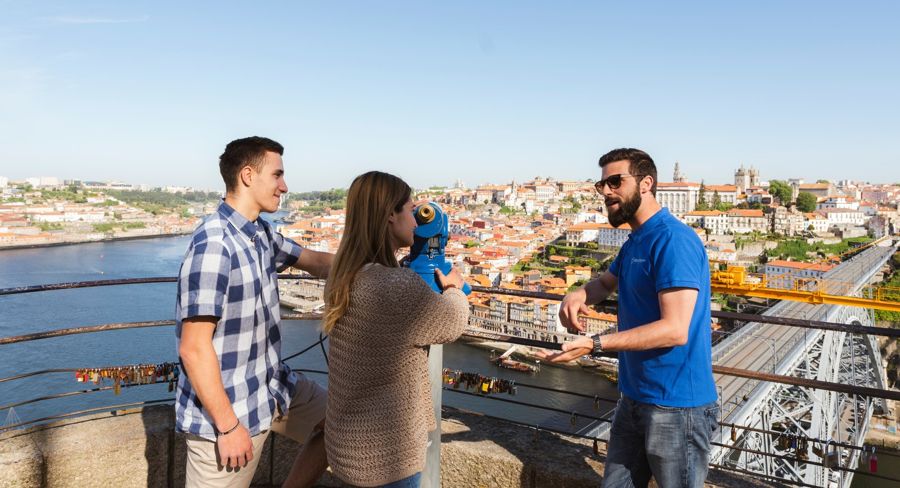
Porto: Riverside Panoramic E-Bike Tour
★ 4.6 · 324 reviewsA three-hour guided e-bike ride along the river through the Ribeira, Miragaia and Foz Velha.
Getting between them
The mistake is to plan the city as a flat grid. The centre sits above the river, and the routes between neighbourhoods follow the terrain.
The metro links the Baixa, Bonfim, Cedofeita and Boavista, and most trips between them are a single central-zone fare on the Metro do Porto tariff, 1.40 euros.
Along the water, tram 1 connects the Ribeira's western edge, Miragaia, Massarelos and Foz, charging about 6 euros on board.
Walkers cross from the Ribeira to Gaia on the bridge's lower deck, and the cable car climbs from the Gaia quay to the Jardim do Morro.
Walking works well within the centre: the Ribeira, the Baixa, Cedofeita and Miragaia are all within about 1.5 km of the Aliados.
Getting around Porto covers every ticket and pass, and where to stay in Porto turns this comparison into a choice of hotel.
Common questions
What is the best neighbourhood to stay in Porto for a first visit?
The Ribeira or the Baixa. The Ribeira is on the river and costs more; the Baixa has the most places to stay, prices near the city median and four metro stations.
Which area of Porto is cheapest to stay in near the centre?
Of the central areas, Bonfim had the lowest median price for a room in mid-October 2026, about 127 euros a night, about 1.3 km from the Aliados.
Is Vila Nova de Gaia part of Porto?
No. It is a separate city across the Douro, reached from the Ribeira on foot across the Luís I bridge.
How do I get to Foz do Douro?
Tram 1 runs there from Infante in roughly twenty minutes; it has its own fare, bought on board.