Some links on this page are affiliate links: if you book through them, we may earn a commission at no extra cost to you. How this works
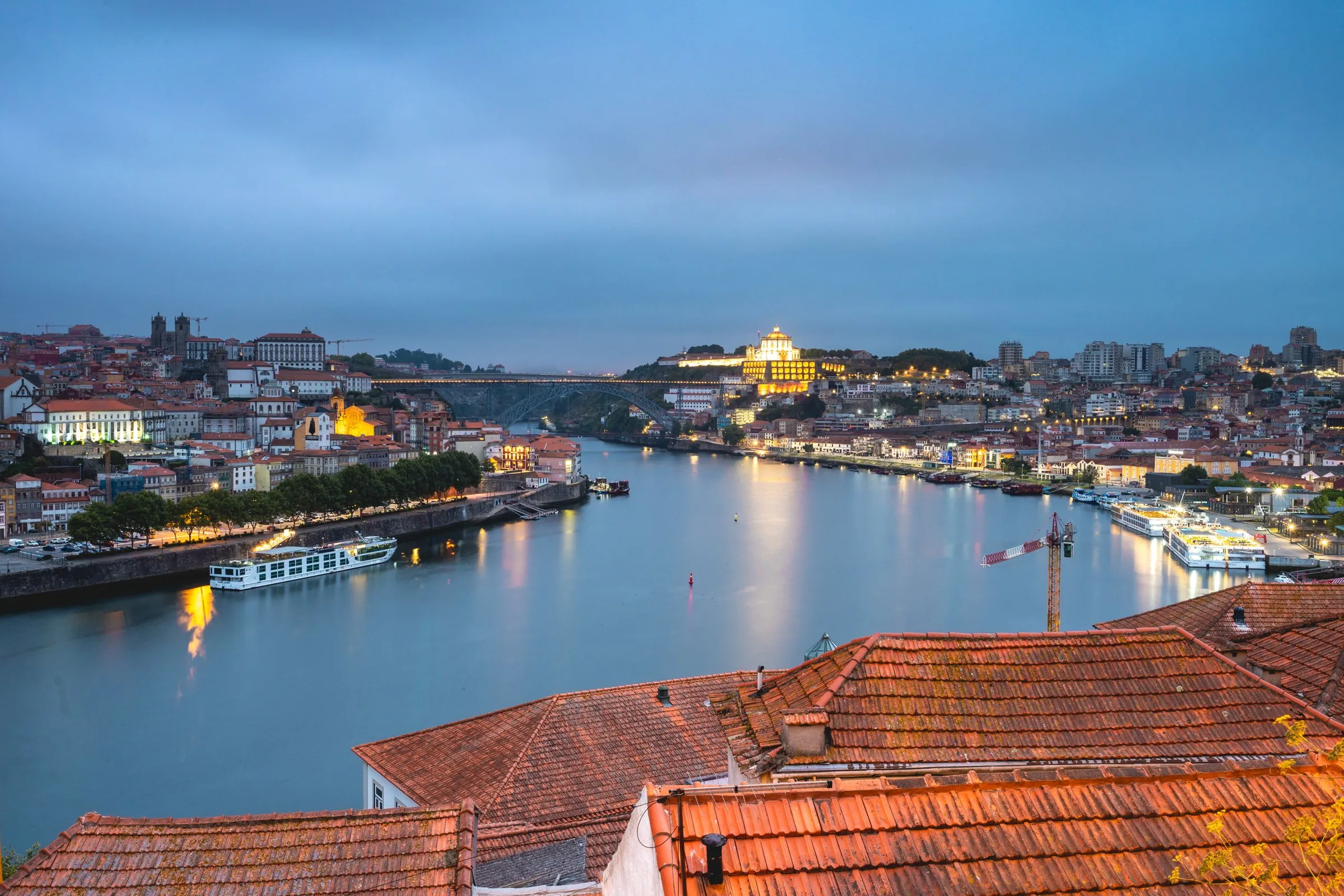
Porto sits at the centre of the north of Portugal, and within an hour or two lie a medieval first capital, a city of churches with a baroque stairway, a canal town with striped beach houses, a river town famous for convent sweets, a national park and a boardwalk canyon. Choosing among the best day trips from Porto is less about which place is prettiest and more about how you want to travel: several are an easy urban train ride for a few euros, and others are only practical by car or with a tour (car hire prices).
Each trip turns on the same facts: how long the journey takes, what the train costs, what to see, which days and hours matter, and whether a tour makes more sense. Guimarães, Braga and Aveiro work well by train. Amarante, Gerês and the Paiva Walkways are car or tour trips. Viana do Castelo sits in between. The Douro Valley, the most popular trip of all, has its own guide.
Two of the most booked day trips from Porto: the two historic cities of the Minho, or Aveiro with the Paiva Walkways and the suspension bridge.
 Most reviewed
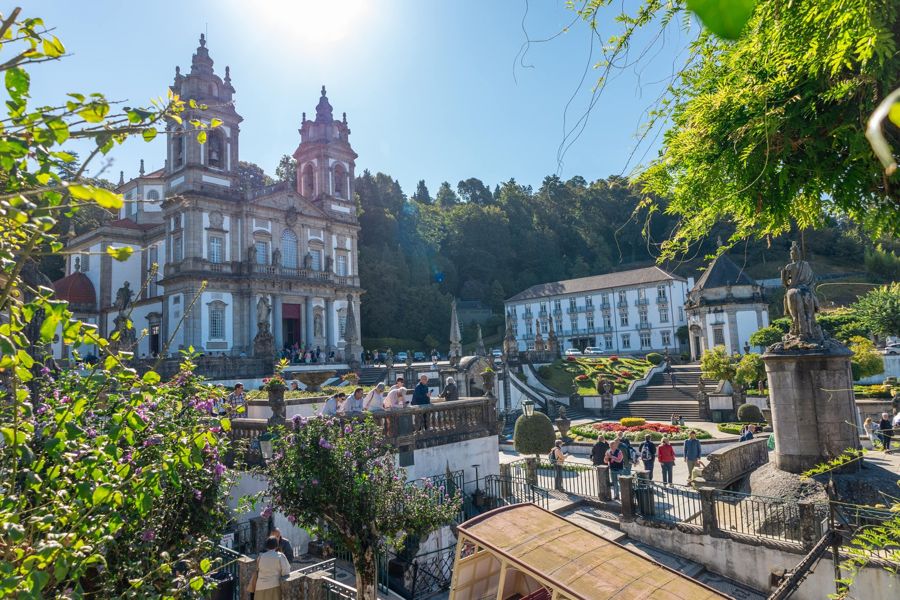
From Porto: Braga & Guimarães Tour with Bom Jesus & Castle
Both cities in one day, with Bom Jesus and the castle, without planning the trains
 Nature and canals
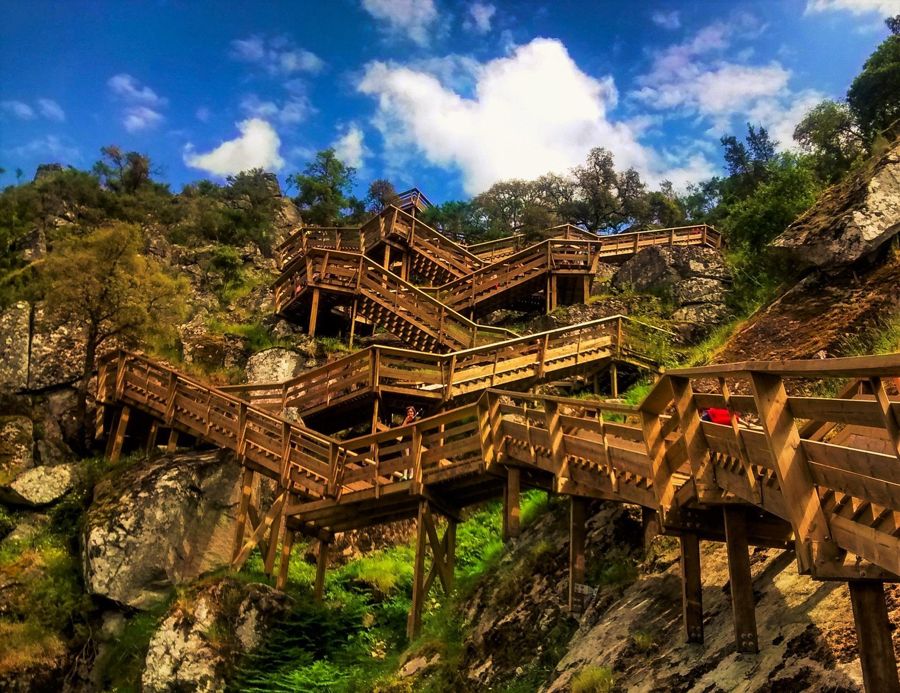
From Porto: Aveiro, Paiva Walkways, & Suspension Bridge Tour
Aveiro's canals with the walkways and the 516 Arouca bridge in one day
Train or tour
The common mistake is to book a tour for a trip the urban train does for a few euros, or to try by train a trip that has no train. The answer depends on the place.
Guimarães is a train trip. The urban line from São Bento takes 1 hour 10 to 1 hour 20 minutes for 3.60 euros, loaded onto a Siga card that costs 0.50 euros, and the historic centre is a 10-minute walk from the station. There are no return tickets, and Guimarães is the end of the line, so afternoon trains back can be up to two hours apart. A Porto to Guimarães tour saves the timetable planning and usually adds Braga the same day.
Braga is also on the urban network, 54 to 71 minutes for the same 3.60 euros, with trains at least hourly, and Aveiro is 1 hour 15 minutes for 3.95 euros.
The towns to the east are different. Amarante is not on the urban train network; by road it is 60.6 km, about 44 minutes. A Porto to Amarante and Vila Real tour, or a car, is the practical way to combine Amarante with Vila Real and the Mateus Palace, which lies 4 km from the centre of Vila Real.
Peneda-Gerês has no train and thin bus service, and the Paiva Walkways need a car or a tour. Train timetables for everything else are published by CP.
Day trips from Porto compared
| Place | By public transport | By car | Best for |
|---|---|---|---|
| Guimarães | Urban train, 1 h 10-1 h 20, 3.60 EUR | 54 km, about 43 min | Medieval centre, castle, palace |
| Braga | Urban train, 54-71 min, 3.60 EUR | 54 km, about 42 min | Churches, Bom Jesus |
| Aveiro | Urban train, about 1 h 15, 3.95 EUR | 75 km, about 54 min | Canals, moliceiro boats |
| Amarante | No train | 61 km, about 44 min | River town, convent sweets |
| Viana do Castelo | Train from Campanhã, 75 min, 8.90 EUR | 78 km, about 58 min | Santa Luzia, beaches |
| Paiva Walkways | No practical option | 72 km, about 67 min | Boardwalk, 516 Arouca bridge |
| Peneda-Gerês | Thin bus service | 116 km, about 90 min | National park |
- By public transport
- Urban train, 1 h 10-1 h 20, 3.60 EUR
- By car
- 54 km, about 43 min
- Best for
- Medieval centre, castle, palace
- By public transport
- Urban train, 54-71 min, 3.60 EUR
- By car
- 54 km, about 42 min
- Best for
- Churches, Bom Jesus
- By public transport
- Urban train, about 1 h 15, 3.95 EUR
- By car
- 75 km, about 54 min
- Best for
- Canals, moliceiro boats
- By public transport
- No train
- By car
- 61 km, about 44 min
- Best for
- River town, convent sweets
- By public transport
- Train from Campanhã, 75 min, 8.90 EUR
- By car
- 78 km, about 58 min
- Best for
- Santa Luzia, beaches
- By public transport
- No practical option
- By car
- 72 km, about 67 min
- Best for
- Boardwalk, 516 Arouca bridge
- By public transport
- Thin bus service
- By car
- 116 km, about 90 min
- Best for
- National park
Amarante and Aveiro
The mistake is to think of Amarante only as a stop on the way to the Douro. It is a town worth a day of its own.
Amarante sits on the Tâmega, the longest tributary of the Douro, below the Serra do Marão. Its patron saint, São Gonçalo, a 13th-century monk, is credited with the first bridge over the river, and in 1809 the town held that bridge against Napoleon's army for about two weeks. It is known for its convent sweets, from papos de anjo to bolos de São Gonçalo, and for the Amadeo de Souza-Cardoso Museum, founded in 1947 in a cloister of the São Gonçalo monastery. A Porto to Amarante tour is usually combined with the Douro Valley or Vila Real.
Aveiro is the easy train trip south. The urban train takes about 1 hour 15 minutes for 3.95 euros, and the centre is a 1 km walk from the station. The town is known for its canals and moliceiro boats, once used to harvest seaweed; a 45-minute ride costs about 14 euros for an adult. Its sweet is ovos moles, egg yolk and sugar in wafer shells. Allow about three hours, plus the boat.
Costa Nova, with its striped former fishermen's houses, is 11 km further, a 40-minute bus for 2.35 euros that fills up in summer. A Porto to Aveiro tour that adds Costa Nova avoids the bus.
- Cheapest trips
- Guimarães and Braga, 3.60 EUR by urban train
- Train card
- Siga card, 0.50 EUR
- Aveiro by train
- About 1 h 15, 3.95 EUR
- Car or tour only
- Amarante, Gerês, Paiva Walkways
- UNESCO sites
- Guimarães, Bom Jesus in Braga
- Walkways booking
- Online in advance, daily limit
Guimarães, the first capital
The mistake is to rush Guimarães as a quick stop. Its old centre rewards a slow walk, and the main monuments keep set hours.
Guimarães was founded in the 10th century and was the first capital of Portugal in the 12th. Its historic centre, about 16 hectares, was inscribed by UNESCO in 2001, and in 2023 the listing was extended to the Couros Zone, the old leather-tanning quarter.
The Palace of the Dukes of Bragança, the castle and the Church of São Miguel are open daily from 10:00 to 18:00, with last admission at 17:30. The palace and the castle each cost 5 euros, both together 8 euros, and a combined ticket with the Alberto Sampaio Museum 13 euros; the palace ticket was priced for a partial closure when checked.
By train, the day starts at São Bento, and the station in Guimarães is a 10-minute walk from the centre. Because afternoon trains back can be two hours apart, check the return before leaving.
Guimarães belongs to the district of Braga, and most tours visit both cities in one day.
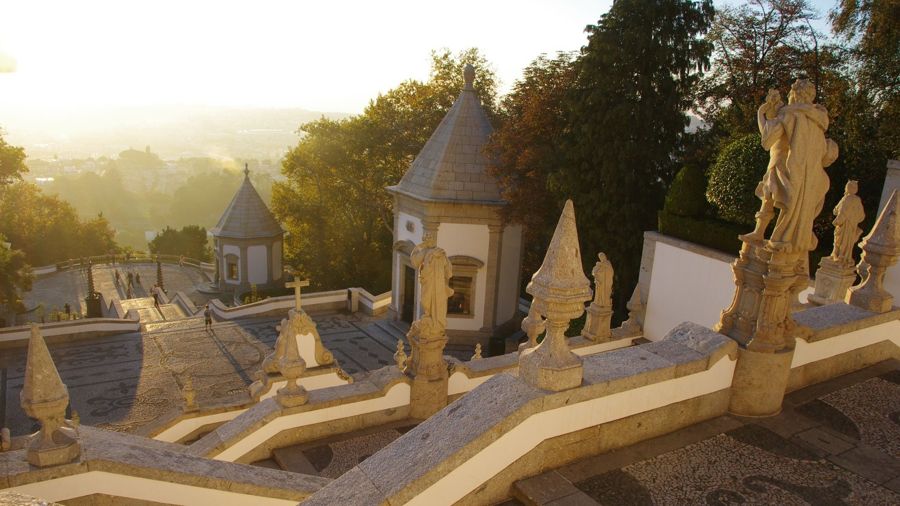
Porto: Guimarães & Braga Tour with Entry Tickets and Lunch
★ 4.8 · 634 reviewsGuimarães and Braga in eight hours with entry tickets and lunch included.
Nature: Gerês and the Paiva Walkways
The mistake is to plan the nature trips like the city ones. They depend on a car, a booking and the season.
Peneda-Gerês, created on 8 May 1971, is Portugal's only national park: 695.9 km² on the border with Spain, part of a cross-border UNESCO biosphere reserve since 2009. It is about 116 km from Porto, 90 minutes by car, with no train and thin bus service, which is why day tours from Porto are the usual way in; they add hiking, swimming or kayaking.
The Paiva Walkways run for 8.7 km along the Paiva river in the Arouca Geopark, a UNESCO Global Geopark. The walk takes about 2 hours 30 minutes one way and is rated hard, with steep slopes and many steps, and it is not adapted for reduced mobility. Tickets must be booked online in advance, there is a daily limit, and nothing is sold at the entrances; children under 10 go free.
Hours change with the season: 08:00 to 20:00 from May to September, 09:00 to 19:00 in April and October, and 09:00 to 17:00 from November to March.
The 516 Arouca suspension bridge, 516 m long and about 175 m above the river, opened on 29 April 2021. Its 12-euro ticket, sold only online on the official site, includes the walkways.
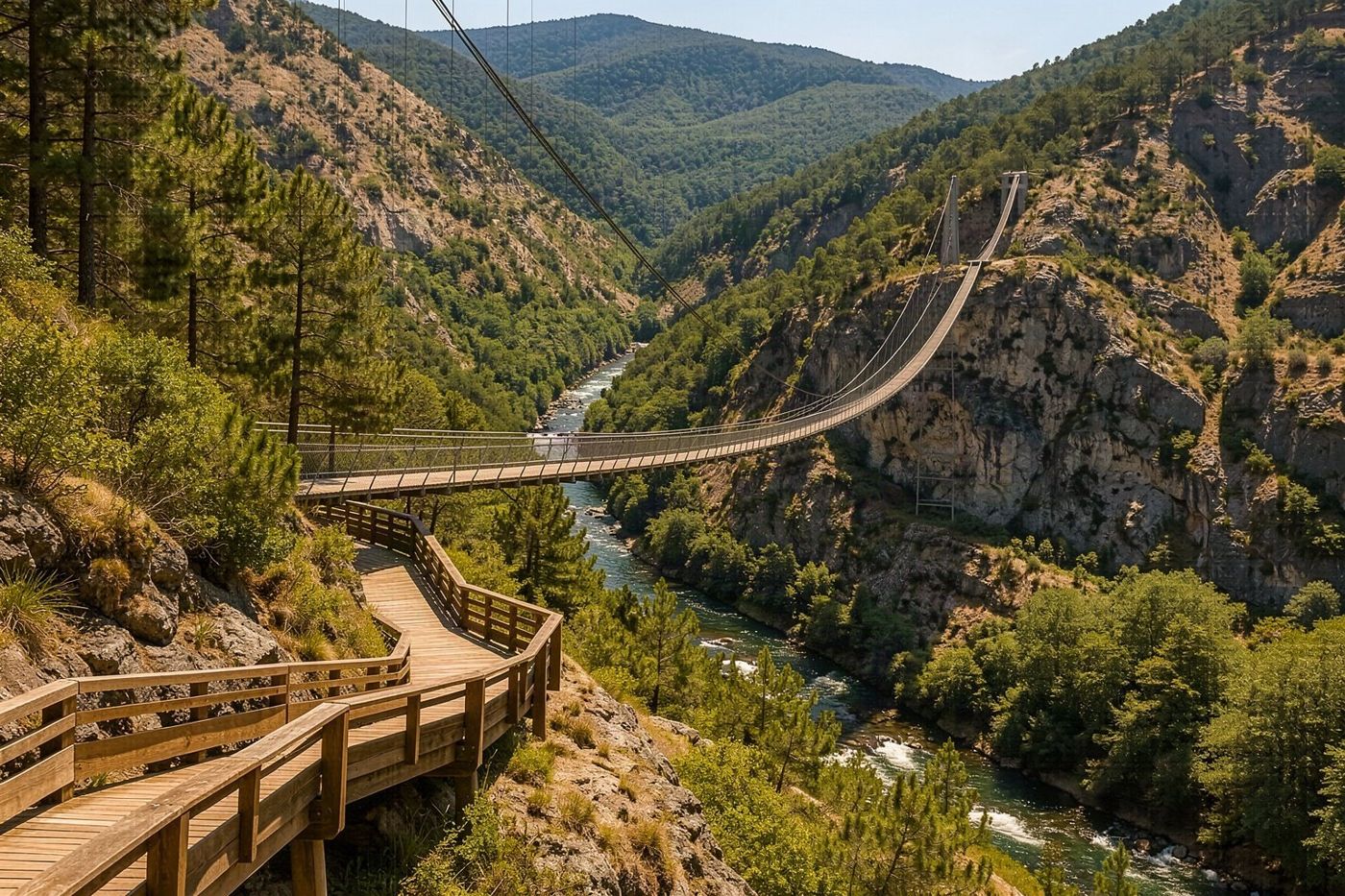 The nature trips depend on a car, a booking and the season.
Braga and Bom Jesus
The mistake is to see only Bom Jesus and skip the city. Braga holds the oldest cathedral in Portugal, and the sanctuary sits on a hill outside the centre.
A Porto to Braga tour or the urban train both work: the train takes 54 to 71 minutes for 3.60 euros and runs at least hourly, and faster Intercidades and Alfa Pendular trains take about 40 minutes at a higher fare.
The Sanctuary of Bom Jesus do Monte was inscribed by UNESCO in 2019. Its baroque stairway has about 580 steps and is free at any hour. Beside it runs the funicular, opened on 25 March 1882, the first in the Iberian Peninsula and the oldest in service in the world using water counterweights; the track is 267 m long and climbs about 116 m, and a single ride is about 2.50 euros.
A record of a hermitage on the hill goes back to 1373, and the sanctuary grounds cover 232 hectares.
By car, Bom Jesus is about 58 km from Porto, 50 minutes, and a tour that includes it saves arranging the last stretch up the hill.
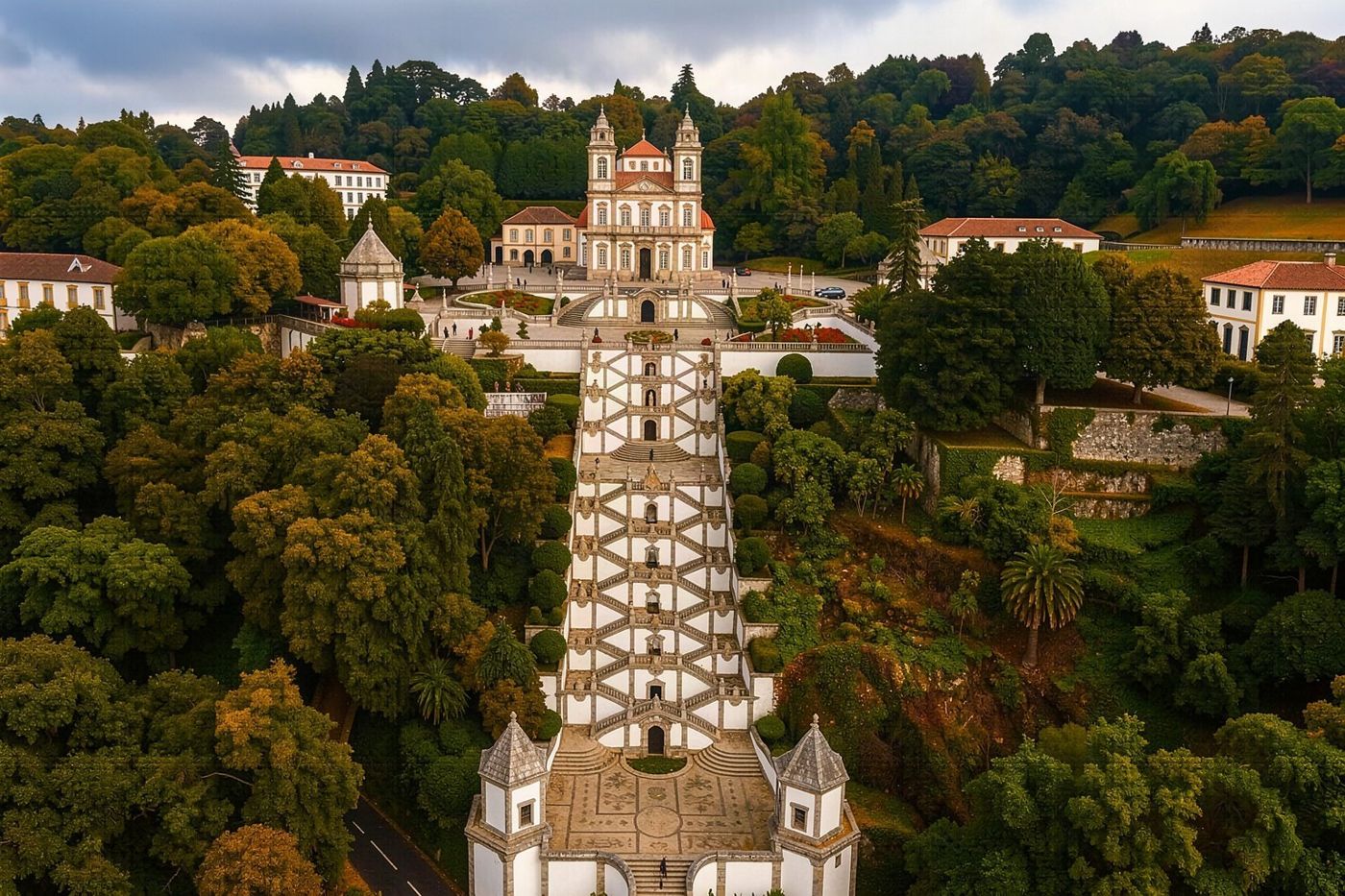 Braga holds the oldest cathedral in Portugal; the sanctuary is outside the centre.
Braga and Guimarães in one day
The mistake is to plan both cities as full visits in one day. Combined, each gets about three hours.
A Porto to Guimarães and Braga tour is the most common way to see both: the cities are sold together as one day, with transport between them and often the entry tickets and lunch included. The most reviewed of these tours runs for about nine hours and includes Bom Jesus and the castle.
By train, the two are on separate lines of the urban network, so doing both in a day means planning the link between them, which eats into the three hours in each. For a traveller with two free days, one city per day by train is the calmer plan.
The urban network itself has 87 stations and 211 km of track over four lines, to Aveiro, Marco de Canaveses, Braga and Guimarães, within about 60 km of Porto.
Check the day of the week: most museums in the region close on Mondays, while the Ducal Palace in Guimarães opens daily.
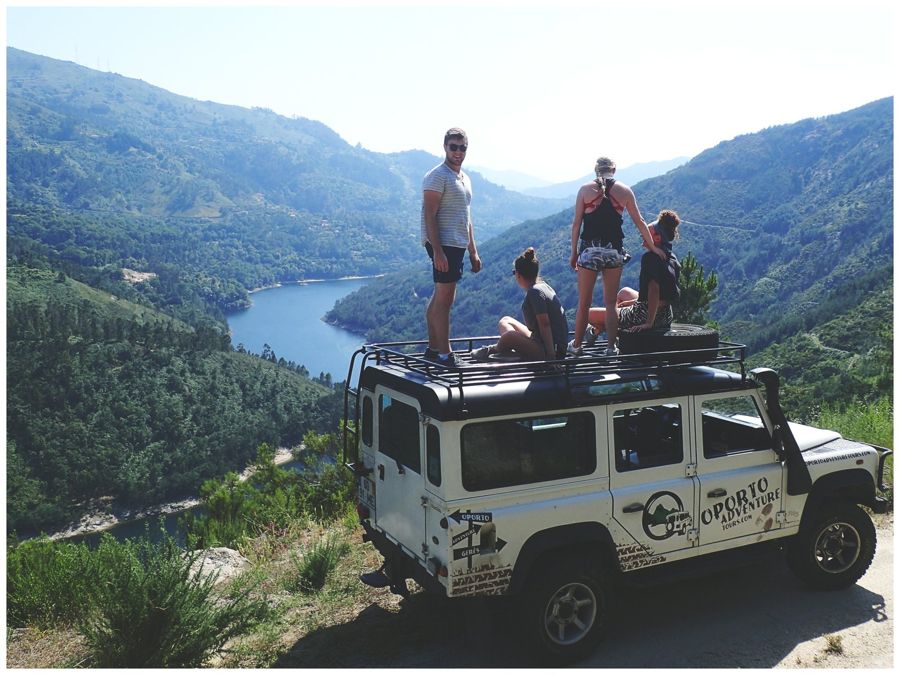
From Porto: Peneda-Gerês National Park Tour with Lunch
★ 4.9 · 1,306 reviewsA full day in the Peneda-Gerês National Park from Porto, with lunch.
Viana do Castelo and further afield
The mistake is to overlook the coast north of Porto. Viana do Castelo combines a hill sanctuary, a museum ship and a long beach.
By train from Campanhã, the fastest services take 75 minutes for 8.90 euros. A Porto to Viana do Castelo tour usually combines it with Ponte de Lima, which has no direct public transport from Porto, or with Braga and Guimarães.
Above the town, Monte de Santa Luzia rises 228 m, with the Iron Age ruins of the Citânia near the top and a sanctuary begun in 1904. A funicular, running since 1923, costs 2 euros single and 3 return, or there is a path of 660 steps. In the river, the Gil Eannes, a hospital ship built in 1955 for the cod fleet, is a museum. Praia do Cabedelo, over 3.5 km long, is popular for surfing and kitesurfing, and the town's great festival, the Romaria de Nossa Senhora d'Agonia, is in August.
Further south, Coimbra is 1 hour 9 minutes by Alfa Pendular for 19.70 euros, Fátima about two hours by coach, and Santiago de Compostela in Spain 3 hours 59 minutes to 5 hours by coach. Coach routes are run by operators such as ALSA.
Common questions
What is the easiest day trip from Porto by train?
Guimarães or Braga, each about an hour on the urban train for 3.60 euros, or Aveiro, about 1 hour 15 minutes for 3.95 euros.
Can I visit Braga and Guimarães in one day?
Yes, usually with about three hours in each. Tours combine them in eight to nine hours; by train they are on separate lines, so two days is the calmer plan.
Do I need to book the Paiva Walkways?
Yes. Tickets are sold online in advance with a daily limit, and nothing is sold at the entrances. Children under 10 go free.
How do I get to Peneda-Gerês from Porto?
By car, about 116 km and 90 minutes, or on a day tour. There is no train and bus service is thin.