Some links on this page are affiliate links: if you book through them, we may earn a commission at no extra cost to you. How this works
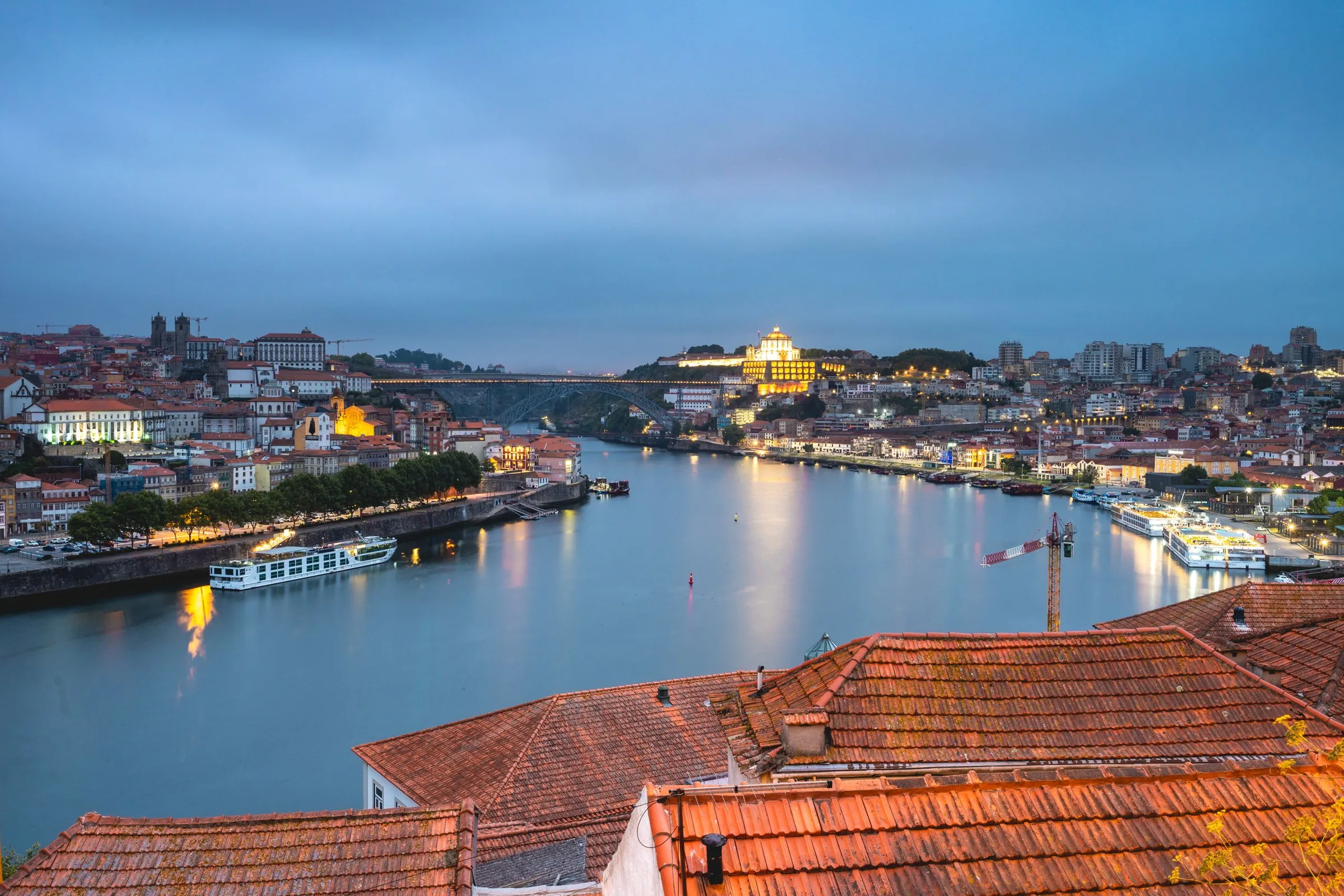
Two rivers run through a Porto holiday. One is the wide, tidal stretch under the bridges, lined with boats and lodges, ten minutes from a hotel. The other is the working river upstream, cut into terraces, where the wine actually comes from. They are not the same place: the Douro Valley Porto sells as a day trip is the second one, a couple of hours upstream in each direction.
The wine country begins about 157 km from the city by road, roughly two hours and twenty minutes of driving, or 1 hour 55 minutes by train to Régua. It is not a morning excursion that fits around lunch. It is the day, and building the rest of the trip around it works better than trying to squeeze it in.
The practical shape of that day comes down to a few questions: how far the valley really is, which train goes where and what it costs, when a car helps and when it is a liability, what a cruise does and does not include, and when the valley is worth a night rather than an afternoon. The individual tours, the cruises and the Port lodges in Gaia have pages of their own.
Three full days in the valley, compared
 Our pick
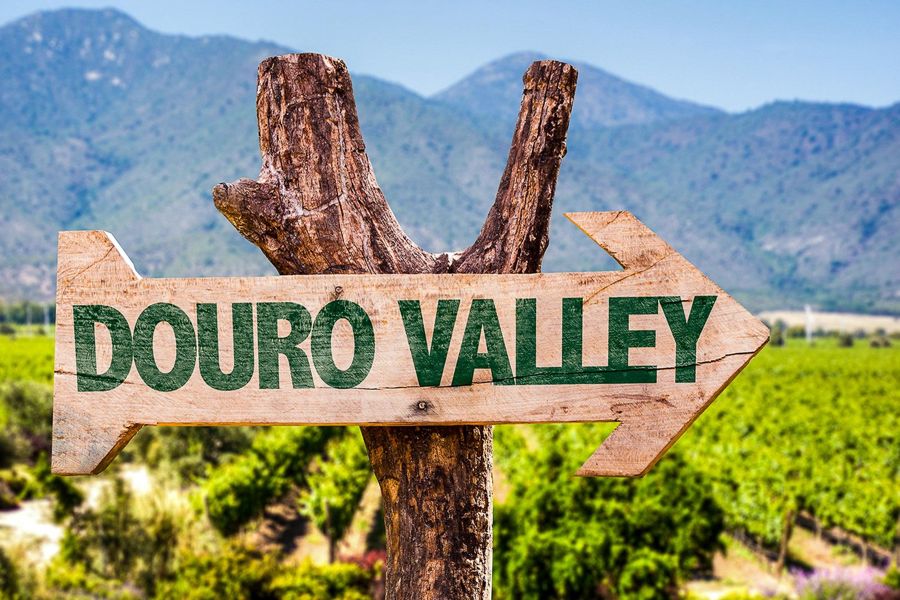
From Porto: Douro Valley w/ Boat Tour, Wine Tasting & Lunch
The standard full day: transport from Porto, a boat leg on the river, a tasting and lunch. Rated 4.66 out of 5 across 21,807 reviews, the deepest evidence in the catalogue
The standard full day: transport from Porto, a boat leg on the river, a tasting and lunch. Rated 4.66 out of 5 across 21,807 reviews, the deepest evidence in the catalogue
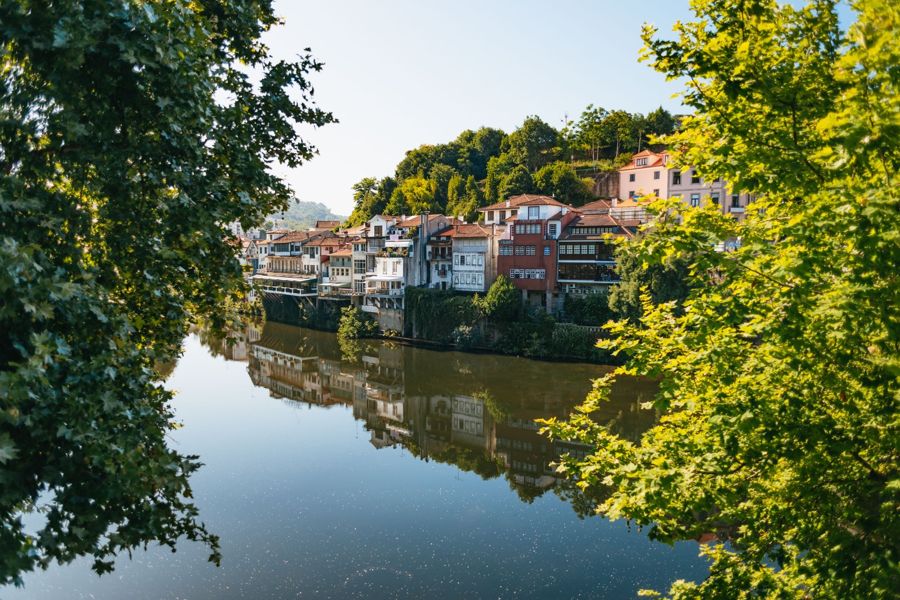
Porto: Douro Valley with Lunch (Optional), Tastings & Cruise
The same day with lunch optional, for travellers who would rather pick their own table. Rated 4.72 out of 5 across 8,611 reviews
The same day with lunch optional, for travellers who would rather pick their own table. Rated 4.72 out of 5 across 8,611 reviews
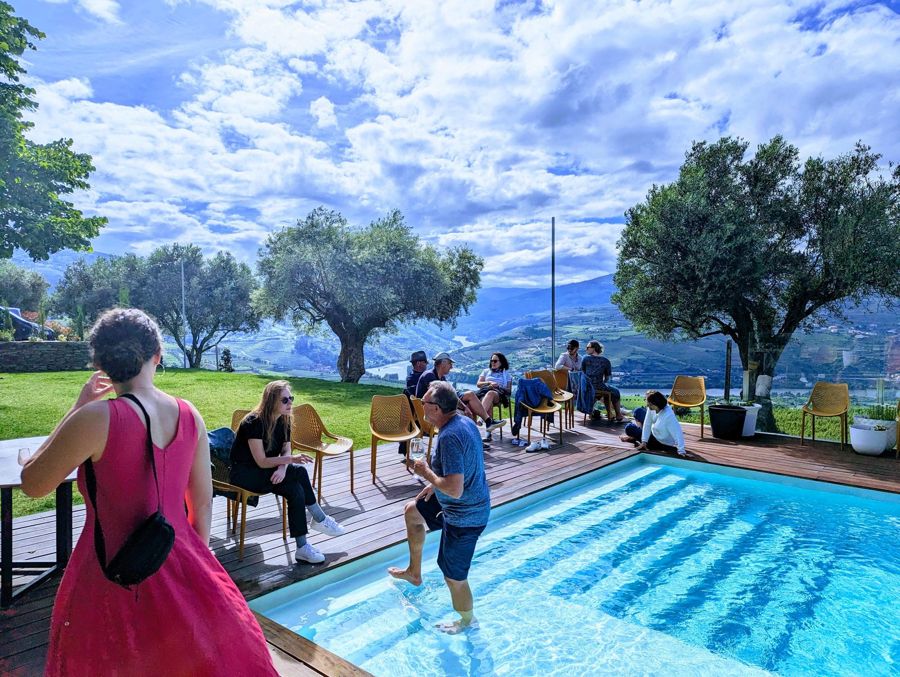
From Porto: 2 Wine Regions, Farm-to-Table Lunch & Boat
Two wine regions in one day with a farm-to-table lunch and a boat leg, which means more road time and more variety. Rated 4.85 out of 5 across 8,176 reviews
Two wine regions in one day with a farm-to-table lunch and a boat leg, which means more road time and more variety. Rated 4.85 out of 5 across 8,176 reviews
The distance decides everything else
Most disappointing days in the valley come from underestimating the map, so start there.
How far is Douro Valley from Porto depends on which part of it you mean, because the region is long. The heart of the wine country sits about 157 km from the city by road, which the road network puts at roughly 2 hours 24 minutes of driving without stops. Peso da Régua, the working town in the middle of the region, is closer: 94 km and about 75 minutes. Pinhão, the postcard village further upriver, is 124 km and about 95 minutes.
Those are car times, computed over the open road network rather than quoted by an operator, and they describe a vehicle that does not stop. A coach collecting passengers from four hotels adds an hour before it leaves the city.
Add a return leg and the arithmetic is unforgiving. A day trip to Pinhão spends three hours or more in transit whatever the brochure implies, which leaves five or six hours in the valley from a ten-hour day. That is enough for two quintas and a long lunch. It is not enough for two quintas, a long lunch, a boat, a village and a viewpoint, and a tour that promises all of them is promising a bus window.
- UNESCO World Heritage
- Alto Douro Wine Region, inscribed 2001
- Area of the listed property
- 24,600 ha
- Region first demarcated
- 1756
- Vineyard area of the demarcated region
- 45,000 ha
What you are actually going to see
Visitors expect vineyards and get something stranger: a landscape that was built, stone by stone, on a slope nobody sensible would farm.
The Alto Douro Wine Region was inscribed by UNESCO in 2001, and the listed property covers 24,600 hectares of terraced hillside. The region was formally demarcated in 1756, which makes it one of the oldest protected wine regions anywhere, and the vineyards inside the demarcated region cover about 45,000 hectares in all.
What those numbers describe is scale. Porto and Douro Valley vacations are sold with photographs of a single terraced bend in the river, and the reality runs for dozens of kilometres in every direction, with the terraces climbing hundreds of metres above the water. Nothing in the valley is one viewpoint.
The second thing to expect is that it is a working region rather than a theme park. Harvest brings lorries and crowds of pickers to roads built for donkeys. Quintas are farms with businesses attached, not visitor centres, and the smaller ones close when there is work to do. The wine tourism is genuine and it is also secondary, which is exactly why it is worth the drive.
Trains up the Douro line from Porto Sao Bento
| Destination | Journey | Single fare |
|---|---|---|
| Peso da Regua | 1 h 55 min | 11.10 EUR |
| Pinhao | 2 h 20 min | 12.45 EUR |
| Pocinho, the end of the line | 3 h 20 min | 15.10 EUR |
- Journey
- 1 h 55 min
- Single fare
- 11.10 EUR
- Journey
- 2 h 20 min
- Single fare
- 12.45 EUR
- Journey
- 3 h 20 min
- Single fare
- 15.10 EUR
One long day, or two nights
The valley rewards a night more than almost any other day trip from the city, and the reason is the light.
A day visit arrives around midday and leaves in the middle of the afternoon, which is the flattest, hottest, least interesting light the valley gets. Staying means the evening and the early morning, when the terraces have shadows in them and the river holds the sky. Porto and Douro Valley holidays that give the region two nights and the city four are better balanced than the usual split, which gives the valley six hours.
There is also a train that only exists at certain times of year. The Douro Historical Train runs between Régua and Tua at weekends from June to October, with five historic carriages behind a diesel locomotive, from 32 euros. It leaves Régua at 15:32, calls at Pinhão at 16:06 and is back in Régua at 18:22. The dates change every year and the railway publishes them rather than any travel site.
If the trip has only one day to give, take it, and accept the flat light. If it can spare two nights, put them in the middle of the holiday rather than at the end.
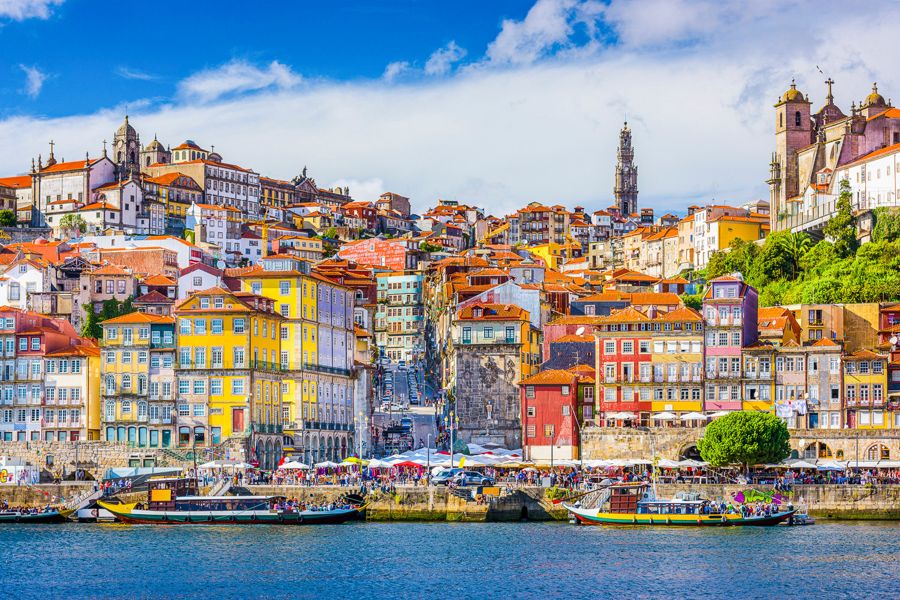
Porto: Six Bridges Cruise , 4.24/5 from 15,297 reviews. Includes a cruise past the six bridges between Porto and Vila Nova de Gaia. Best for the day either side of the valley, when an hour on the water in the city is the right size of outing.
★ 4.2 · 15,297 reviewsThe city river rather than the valley: an hour under the bridges, before or after the trip upstream
Pinhão, and the station everyone photographs
The small village that appears on the cover of every book about the region is Pinhão, and it earns the attention for two reasons.
The first is the bend in the river it sits on, with terraces on both banks. The second is the railway station, whose walls carry 24 azulejo panels showing the landscape, the grape harvest, the making of Port and the rabelo boats that once carried barrels downriver. It is a working station, not a museum, and the platform is free to walk onto.
A Porto to pinhao tour by rail is straightforward: 2 hours 20 minutes from São Bento on the inter-regional service, 12.45 euros each way, on the line that follows the water for most of its length. The MiraDouro service runs daily in both directions between Porto, Régua, Pinhão and Pocinho in 1940s Swiss carriages with windows that open, at the ordinary fare.
Two practical notes. Trains up the line are not frequent, so the return time decides the day rather than the other way around, and the village itself is small: an hour covers it, and the rest of the time belongs to the quintas above it or a boat on the river below.
- Road distance, Porto to the valley
- 157.3 km
- Driving time
- about 2 h 24 min
- Road distance to Peso da Regua
- 94 km, about 75 min
- Road distance to Pinhao
- 124.3 km, about 95 min
- Douro railway, Porto to Pocinho
- 160 km
- Navigable river, Porto to Barca d'Alva
- 210 km
- Tile panels at Pinhao station
- 24
Lodges are in Gaia, quintas are upriver
This is the single most useful distinction on the subject, and most first-time visitors learn it too late.
The Port houses with the famous names keep their cellars in Vila Nova de Gaia, across the bridge from the Ribeira and about 500 metres from a hotel in the old town. A tour there with two wines runs from about 12 to 18 euros at the larger houses and from 5 to 8 at the smaller ones. That is an afternoon, not a day, and it is not a trip to the country.
Wineries in Douro Valley near Porto are two hours upriver, on the terraces, and a visit to one is a visit to a working farm. The tasting is usually longer, often includes a walk through the vineyard, and frequently has to be booked ahead because the family showing you round is also making the wine.
Both are worth doing and they answer different questions. The lodges explain how Port is aged, blended and sold. The quintas explain where it comes from and why the landscape looks like that. A trip that does only the lodges has seen the business end of the wine, and a trip that does only the quintas has skipped the part that is walkable from dinner.
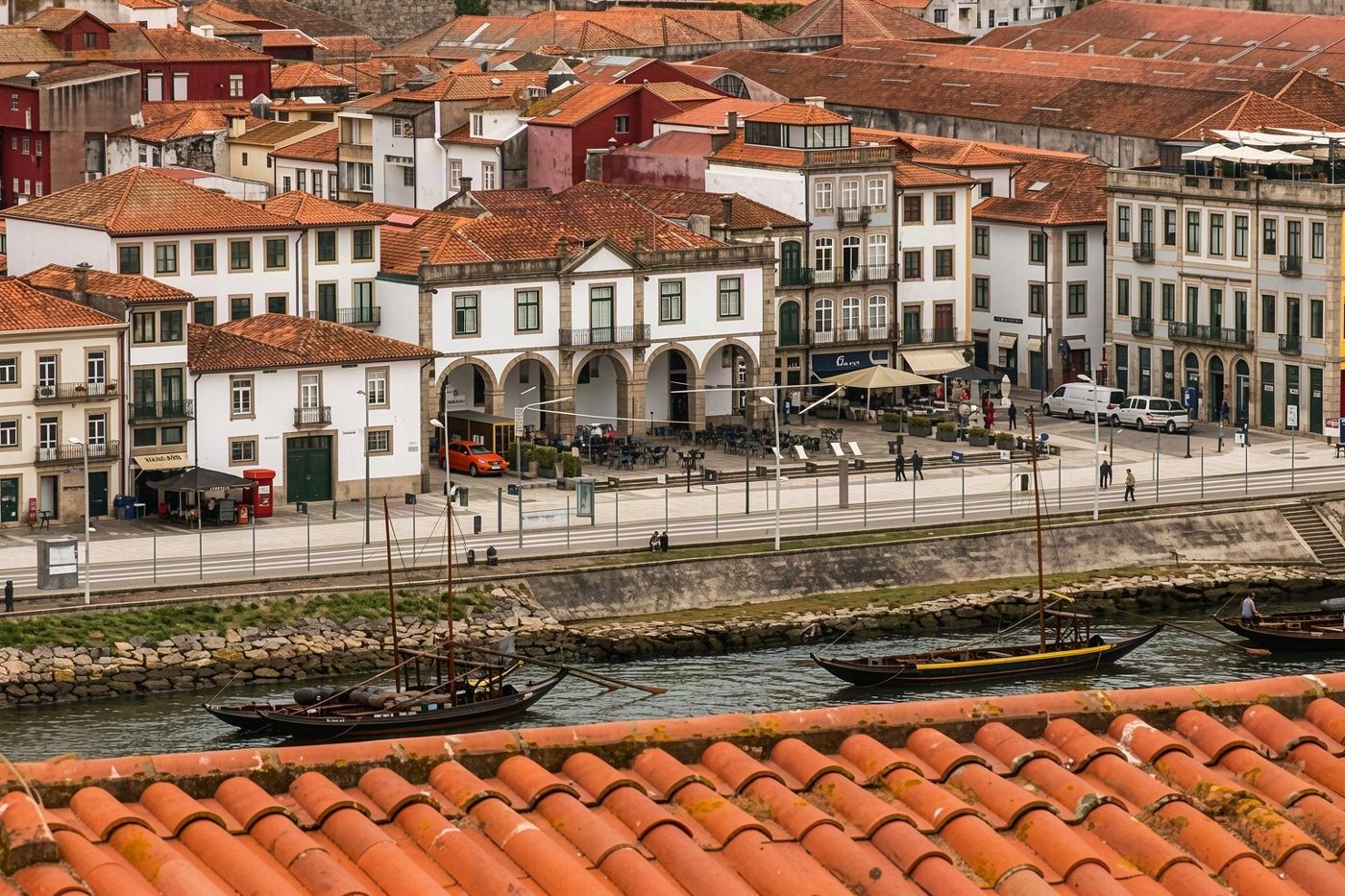 The famous names keep their cellars in Gaia; the vineyards are upriver.
Driving, and the reason many people should not
A car gives the valley back its scale. It also takes something away, and it is worth being honest about which matters more on a given trip.
Porto to Douro Valley by car is about 157 km and roughly 2 hours 24 minutes each way to the heart of the region, less to Régua at 94 km and around 75 minutes. The roads above the river are narrow, steep and full of blind bends, and they are used by farm traffic. None of that is difficult driving in good weather. It is tiring driving after a tasting.
That is the catch. The whole point of the valley is wine, and Portugal's drink-driving limits are strict. Somebody has to stay under them, which in practice means one person tastes and spits or the party takes a tour.
A car makes sense for travellers who want several quintas over two days, who are staying in the region rather than day-tripping, or who are travelling with children who need a stop when they need a stop. For a single day of wine from a Porto hotel, the train or an organised day removes the one problem a car cannot solve.
- Average daily high, January
- 12.4 C at Regua
- Average daily low, January
- 3.8 C at Regua
- Average daily high, June
- 28.0 C at Regua
- Sunshine hours, January
- 88 h
Getting there without a car
Three ways up the river work without a steering wheel, and they suit different days.
How to get from Porto to Douro Valley most cheaply is the train from São Bento: 11.10 euros to Régua in 1 hour 55 minutes, 12.45 to Pinhão in 2 hours 20, and 15.10 to Pocinho at the end of the line in 3 hours 20. The line follows the water for the last stretch and the fares are published by the national railway rather than set by demand.
The second is a cruise, which is the slow option in the best sense. Day boats from Porto usually run one way, ending at Peso da Régua, with a coach or a train back. That is a full day on the water through the locks, and it shows you the river from the river.
The third is an organised day, which collects you in Porto, drives the valley roads, stops where it has arrangements and brings you back. It costs more than the train and less than a private guide, and it is the only option where nobody has to drive or navigate.
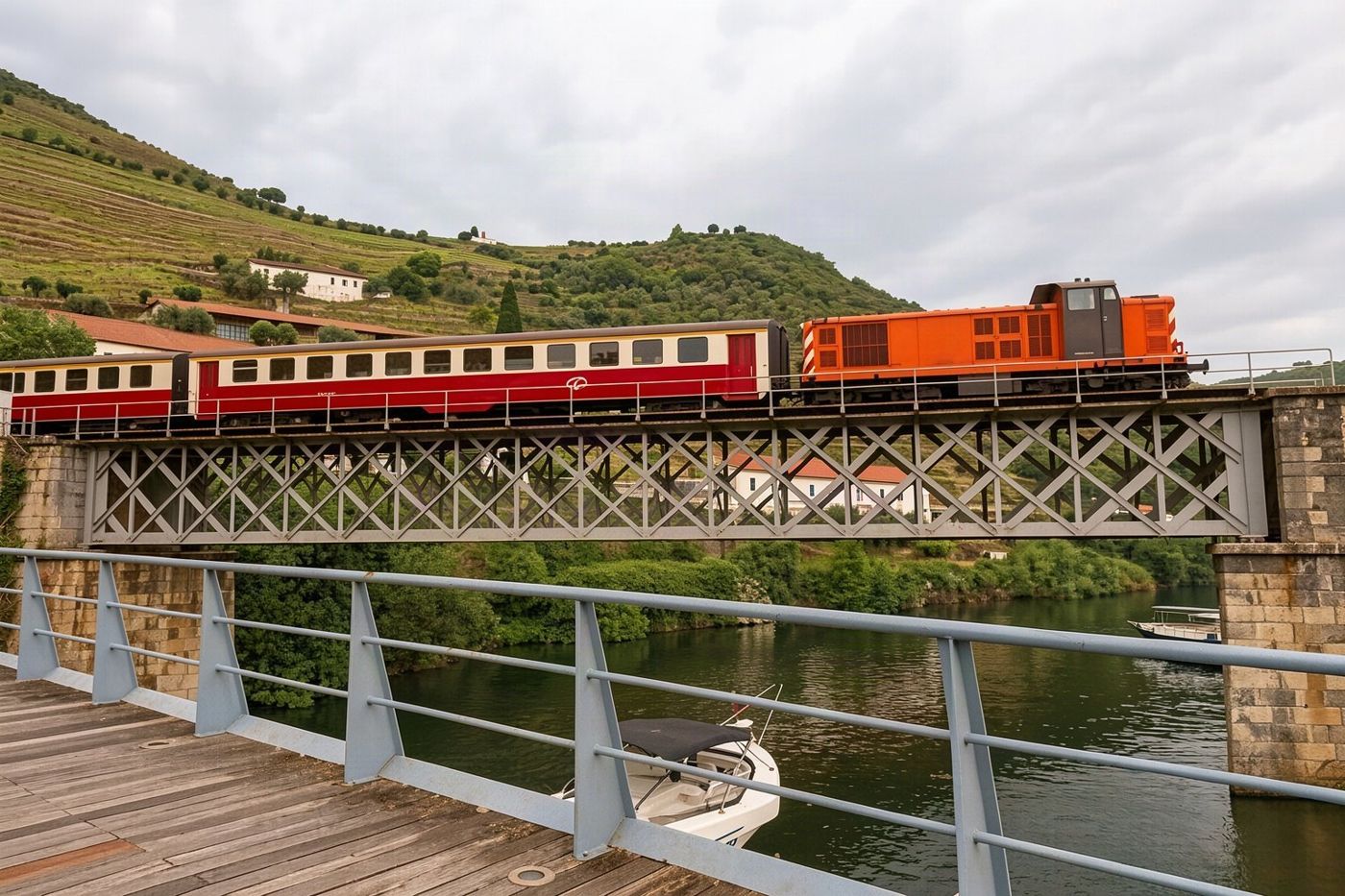 The train from São Bento is the cheapest way up the valley.
Private days and what they should include
The private option gets sold hard and bought badly, so it is worth knowing what separates a good one.
Tailor made vacations Porto and Douro Valley usually mean a car, a driver and two or three quinta visits chosen for you. The value is in the choosing: a good operator books the smaller estates that do not take walk-ins, arranges lunch at a farm rather than a tourist restaurant, and shapes the route around what you actually drink.
What to insist on before booking is specifics. Which quintas, by name. Whether the tastings are included or paid at each stop. Whether lunch is in the price. What time the car leaves Porto and what time it returns. An itinerary that says "two premium wineries" and gives no names is a day that will be arranged on the morning it happens.
The other question worth asking is who drives. On a route this long, a driver who also guides is doing two jobs, and the guiding usually loses. A day that costs more for a separate guide is not automatically better, but the reason for the difference should be stated.
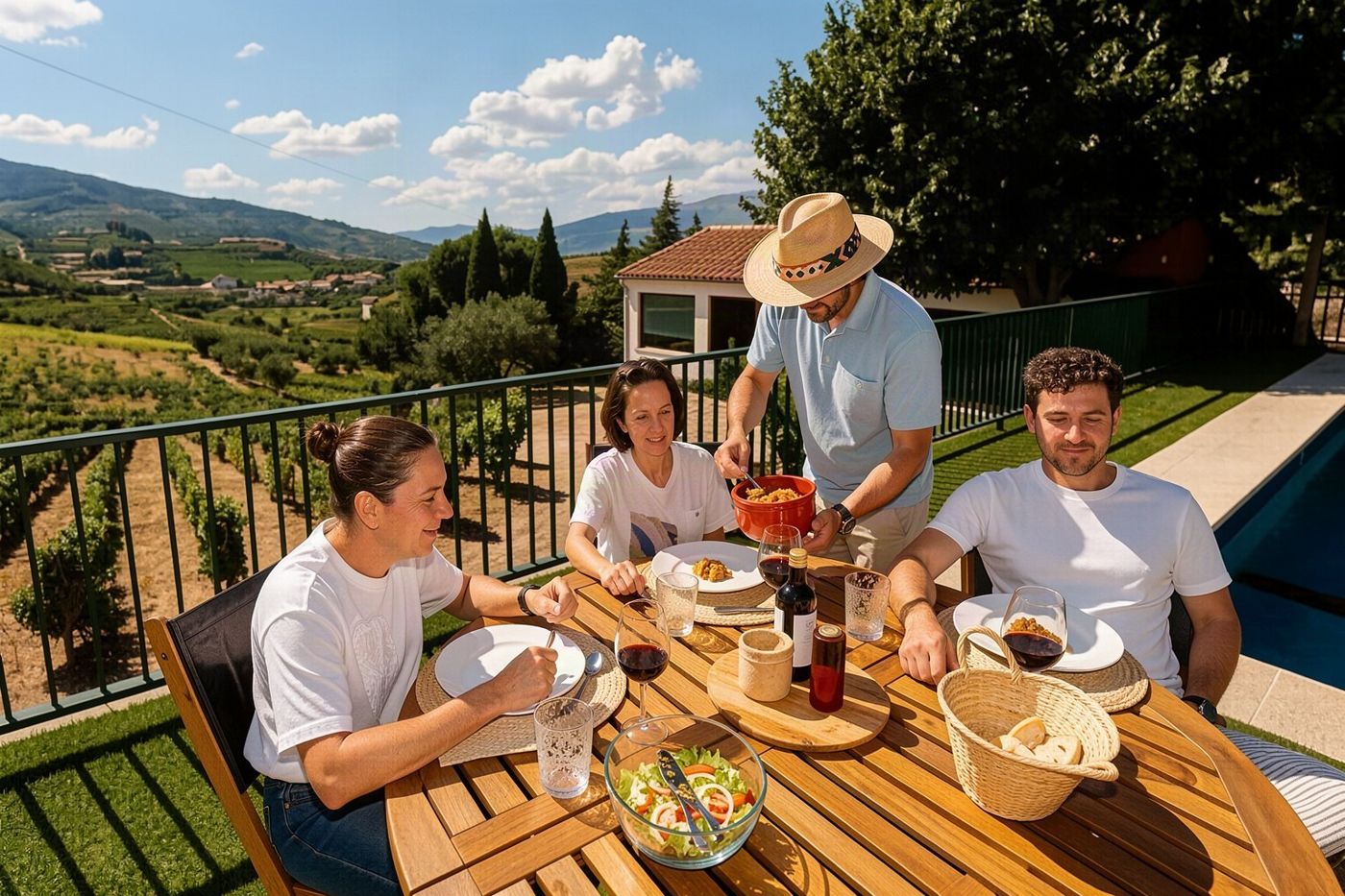 A private day means a car, a driver and two estates, not a longer coach.
Building a longer stay around the valley
Once the trip has more than four days in it, the valley stops being an excursion and becomes the middle of the holiday.
Tailor made holidays Porto and Douro Valley are easiest to build as three stages: the city first, the river in the middle, the city again at the end. Arriving in the valley from Porto and leaving it by train back to the city gives you the river in both directions without repeating a road.
The practical anchors are the railway and the water. The line runs 160 km from Porto to Pocinho, so a stay anywhere along it can be reached without a car. The navigable river runs 210 km from Porto to Barca d'Alva through the locks, which is what makes the longer cruises possible.
The mistake to avoid is over-scheduling the middle. Two quintas a day is a comfortable maximum, three is a route march, and the afternoons in the valley are hot enough in summer that a swim or a shaded lunch does more for the holiday than another tasting room. Book the estates that need booking, and leave one day with nothing in it.
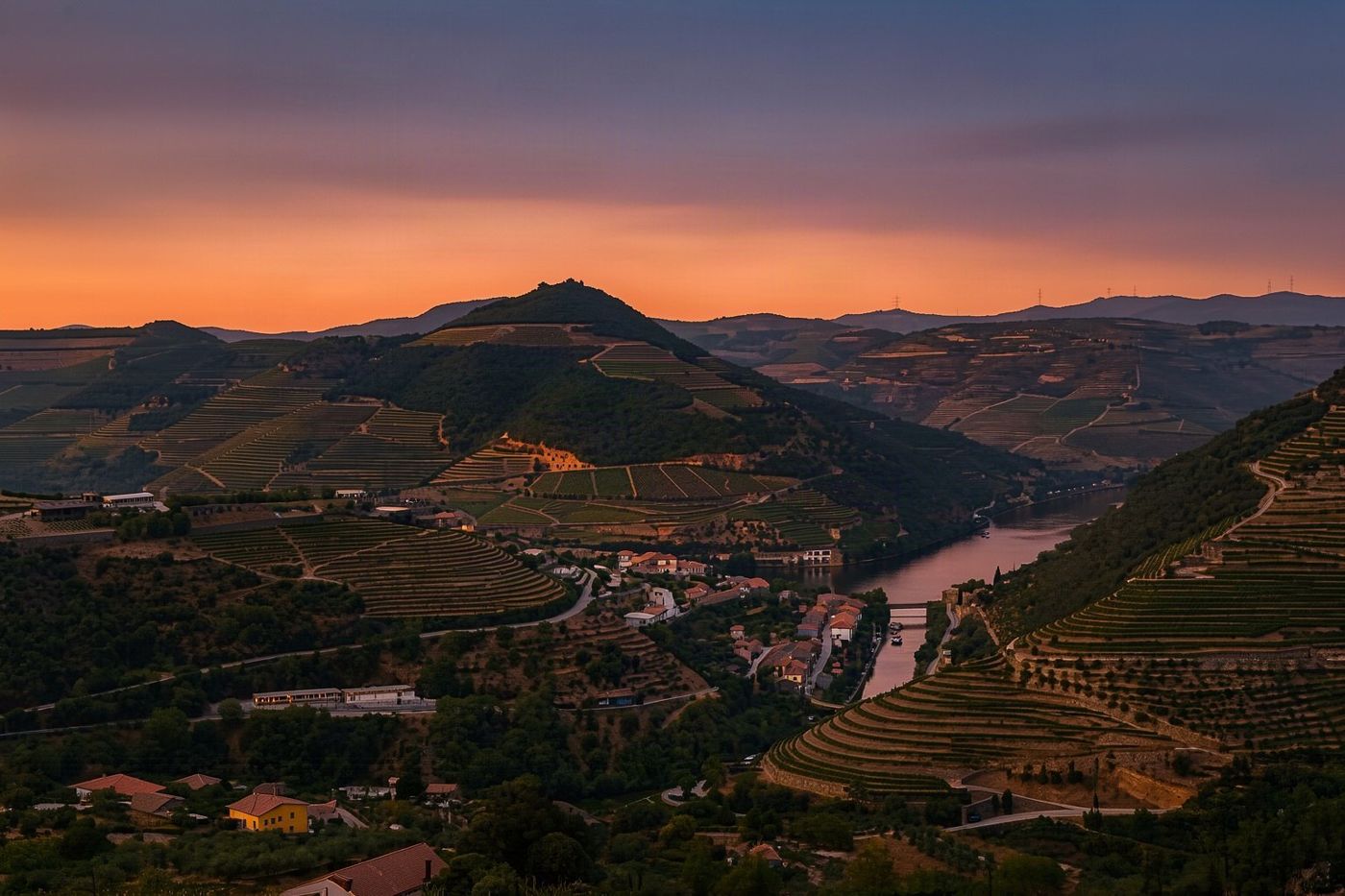 Past four days the valley stops being an excursion and becomes the middle of the trip.
The river itself
The Douro is a working waterway, and what it looks like today is the result of engineering rather than nature.
It is navigable for 210 km, from Porto to Barca d'Alva near the Spanish border, and boats pass through the locks at Crestuma-Lever and Carrapatelo on the way up. Those dams are the reason the river is calm: the rapids that made the rabelo boats dangerous are under water.
The terraced Port vineyards begin around Barqueiros and run up to Pinhão and beyond, which means the scenery on a cruise improves for the entire first half of the journey and then holds. That is worth knowing when choosing between a short cruise near the city and a long one that goes properly upriver: the national tourist board's own description of the route is more accurate than most operator copy.
One warning about cruises sold in Porto. A river cruise is transport and scenery. It does not include a quinta visit or a tasting unless the listing says so in as many words, and the cheaper day boats frequently do not.
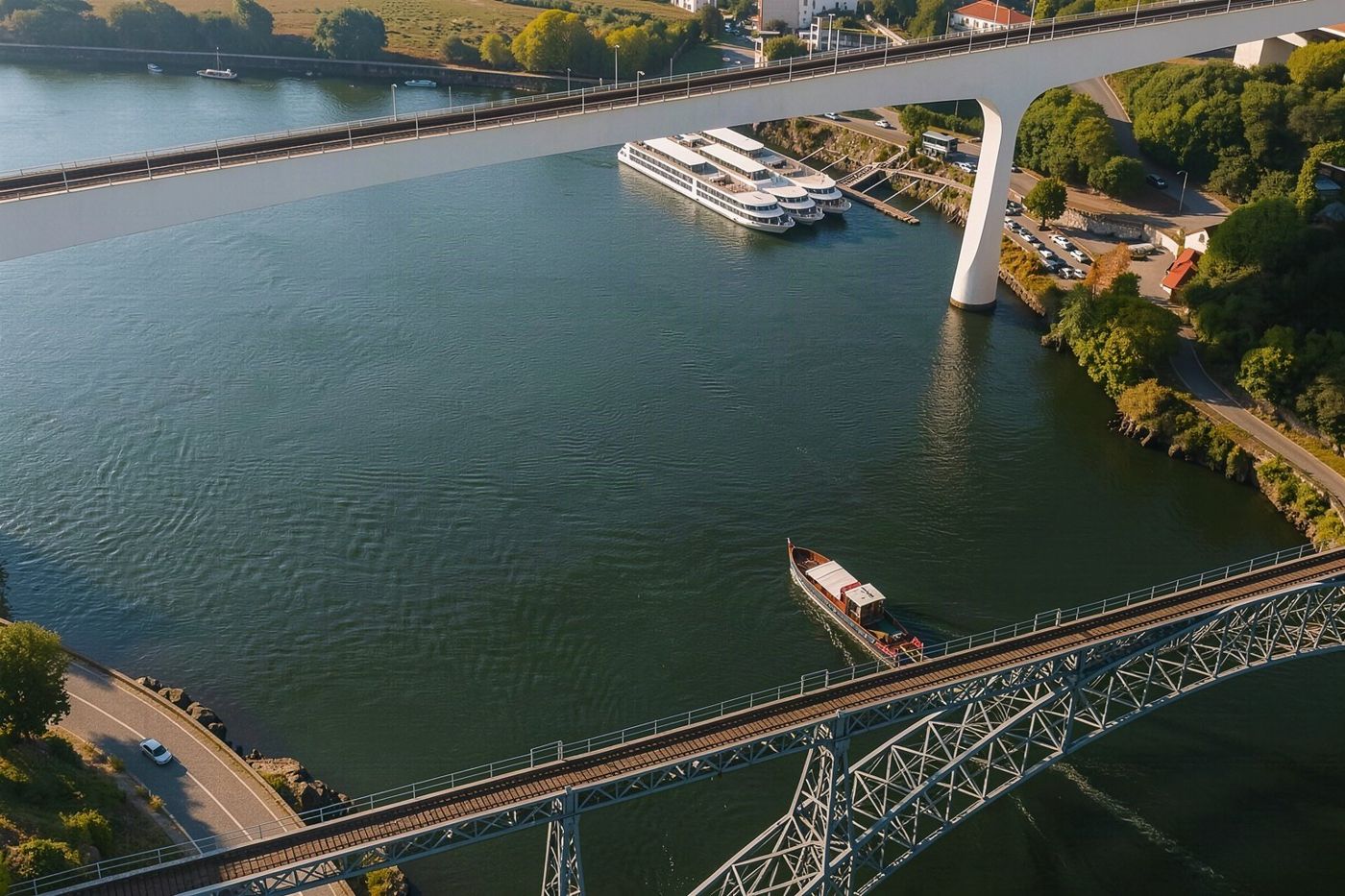 The river is navigable for 210 km because of its dams and locks.
What the day costs
A day in the valley can cost twenty euros or two hundred, and the difference is not comfort.
The floor is the train: 11.10 euros to Régua, 12.45 to Pinhão, 15.10 to Pocinho, each way, with no reservation needed. Add a quinta visit paid at the door and lunch in a village, and an independent day comes in well under fifty euros a head.
The historic train between Régua and Tua at weekends from June to October starts at 32 euros and is a separate ticket from the ordinary service. An organised day from Porto sits higher again, and carries the transport, the tastings and usually a meal.
Two things move those numbers. Every quinta sets its own tasting price and changes it, exactly as the lodges in Gaia do, and none of the figures above cover a bottle you decide to carry home. Treat the fares as the fixed part and everything else as a range, and check both with the railway's own timetable before travelling, because the fares were checked in September 2026 and they move.
Before you book
Four questions answered in advance decide whether a valley day is the best of the trip or the longest.
How much time is actually in the valley, once the transit is counted? For a day from Porto, five or six hours is the realistic answer, so anything advertising four stops is selling a schedule rather than a place.
Which river is being sold? A cruise that stays near the city is a city cruise. The lodges in Gaia are a walk from the Ribeira. The valley itself starts two hours upriver, and a listing that blurs the three is doing so on purpose.
Is a tasting included, or is entry to a quinta included and the wine extra? The distinction is worth twenty euros a head.
And does anybody in the party have to drive? If the answer is yes and nobody wants to spit, that settles the question of car against train on its own, which is the least glamorous and most useful decision of the whole day.
Common questions
How long does it take to get to the Douro Valley from Porto?
About 2 hours 24 minutes of driving to the heart of the wine country, 157 km by road. Peso da Regua is closer at 94 km and about 75 minutes. By train it is 1 hour 55 minutes to Regua and 2 hours 20 minutes to Pinhao.
Can I visit the Douro Valley by train?
Yes. The line runs 160 km from Porto to Pocinho and follows the river for the last stretch. A single is 11.10 euros to Regua, 12.45 to Pinhao and 15.10 to Pocinho, with no seat reservation on the ordinary services.
Is a Douro cruise the same as a Douro Valley tour?
No. A cruise is transport and scenery, usually one way to Regua with a coach or train back, and it includes no quinta visit or tasting unless the listing says so.
Do I need to book a winery visit in advance?
The smaller estates in the valley generally need booking, because the people showing you round are also working the farm. The large Port lodges in Gaia, across the river from central Porto, take visitors through the day.
Is one day enough?
One day gives about five or six hours in the valley and lands in the middle of the afternoon. Two nights gives you the evening and early morning light, which is when the terraces look like the photographs.