Some links on this page are affiliate links: if you book through them, we may earn a commission at no extra cost to you. How this works
The same three days in Porto can be a very different trip depending on who is on it. A family with a pushchair meets the hills first; a couple plans around the sunset; someone travelling alone thinks about hostels and eating at a counter; a group of friends needs one table for ten; a wheelchair user needs the step-free routes; a wine lover wants the quintas as well as the lodges; and a pilgrim is here to start walking north.
What changes for each is a short list. The four most common styles, families, couples, solo travellers and groups, have their own detailed guides, each summarised with the points that matter most. Three more kinds of traveller are covered in full as well: people with limited mobility, travellers whose trip is about wine, and pilgrims starting the Portuguese Way of the Camino in Porto. Each section gives the facts that change the plan, with prices, limits and hours where they matter.
Two of the most booked experiences in Porto, suited to most kinds of traveller.
 Under an hour
 Douro
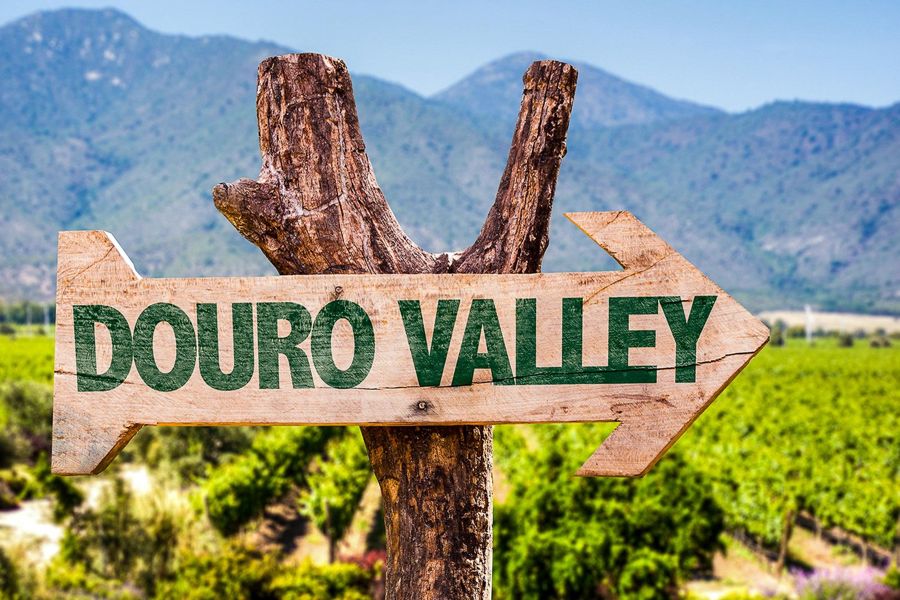
DouroFrom Porto: Douro Valley w/ Boat Tour, Wine Tasting & Lunch
Wine travellers and couples who want the valley without driving
Families with children
The mistake families make is to plan Porto like any flat European capital. The historic centre is cobbles, narrow pavements and hills, so parents in the oldest quarters do better carrying a baby than pushing one, while the newer parts of the city, its green spaces and its beaches pose few problems.
Young children go free at several of the main sights: under 10 at the Torre dos Clérigos and on the Paiva Walkways, and up to 12 at the Palácio da Bolsa with an adult. Children under 13 pay no tourist tax.
Among the museums, World of Discoveries, with its boat ride, and Neonia Porto, an interactive museum open every day, suit children best; the Parque da Cidade and Quinta do Covelo are the big parks. Of the city's 554 restaurants, 194 are good for children and 82 have high chairs.
The Porto with kids guide covers prices, the pushchair question, family stays and day trips in detail.
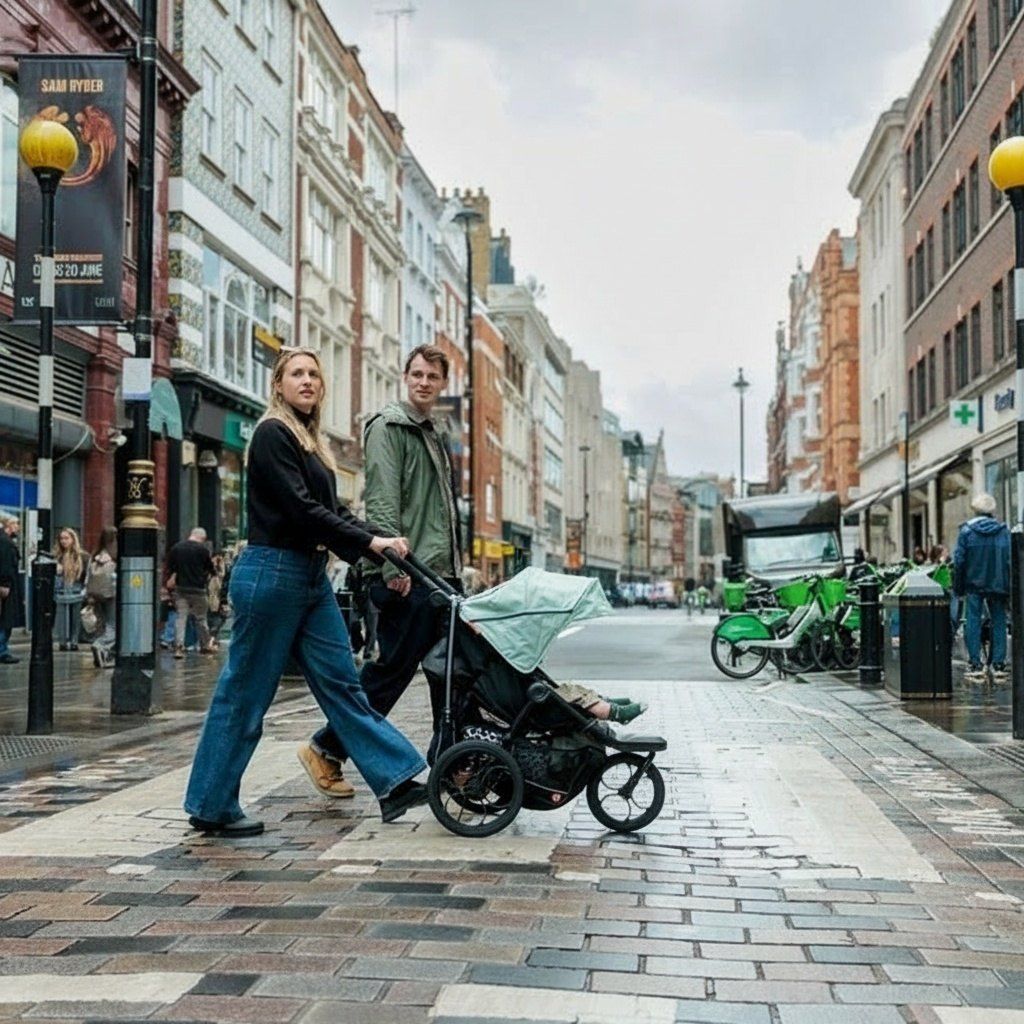 The centre is cobbles, narrow pavements and hills.
Couples and solo travellers
Couples often end the day on the Ribeira quay, facing Gaia. Turn it round: the hilltop garden and the monastery terrace on the Gaia bank face the old town as the light goes, and neither ever closes. Dinner in Foz, by the sea, is quieter than the centre. The Port houses in Gaia offer longer tastings for two, from Sandeman's 1790 Visit with five Ports to Graham's tutored tastings with food. The Porto for couples guide covers sunsets, tastings, fado and restaurants.
Solo travellers tend to fear the wrong thing. By European standards Porto is a safe city, and what actually happens to visitors is petty theft, especially on crowded metro line E from the airport and on the historic trams. Eating alone is easy: 223 restaurants are popular for solo dining, and tascas and markets are simple for one. For a mid-October 2026 weekend, a central dorm bed cost from around 16 euros a night (what a week in Portugal costs). The solo travellers guide covers hostels, meeting people and cheap transport.
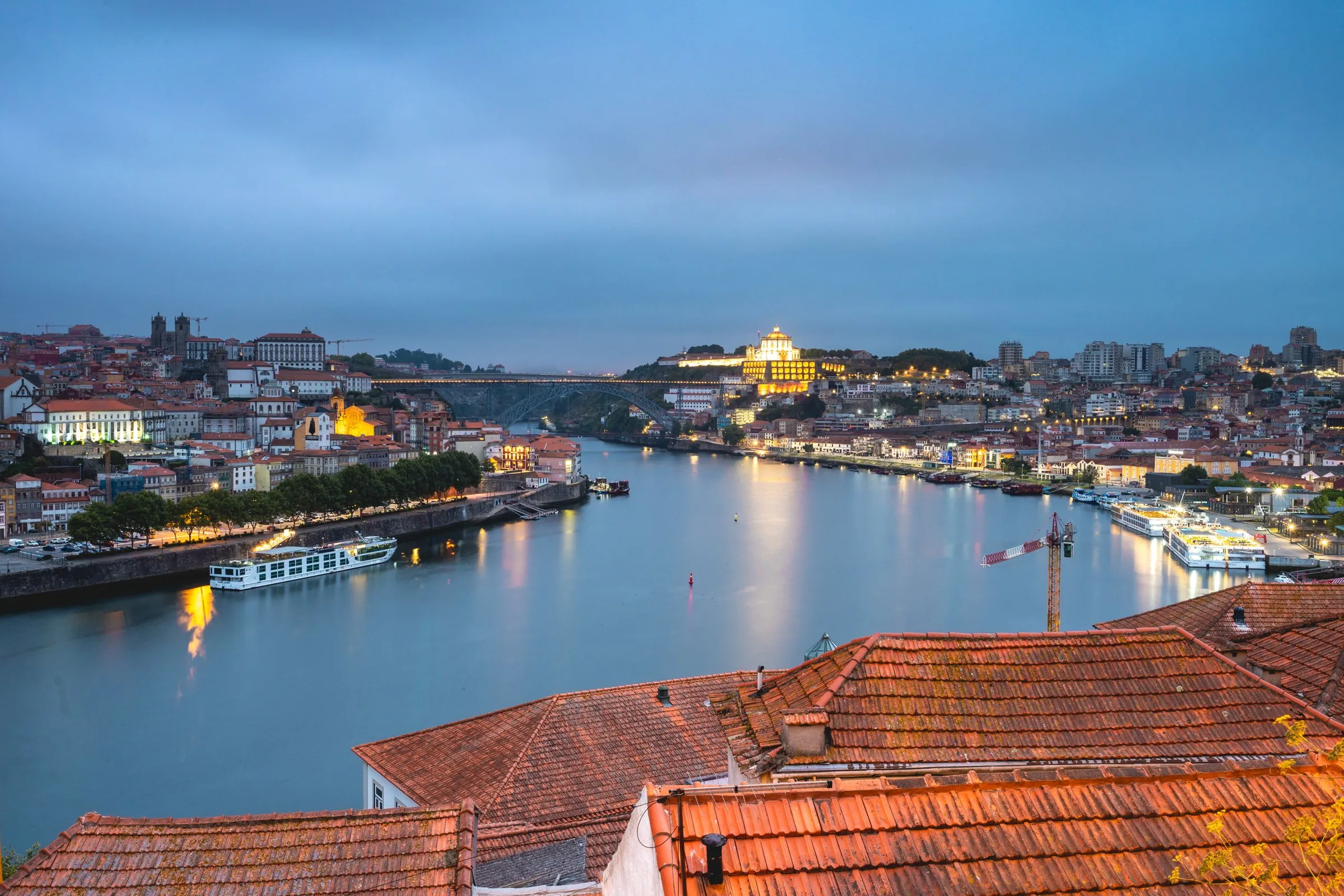
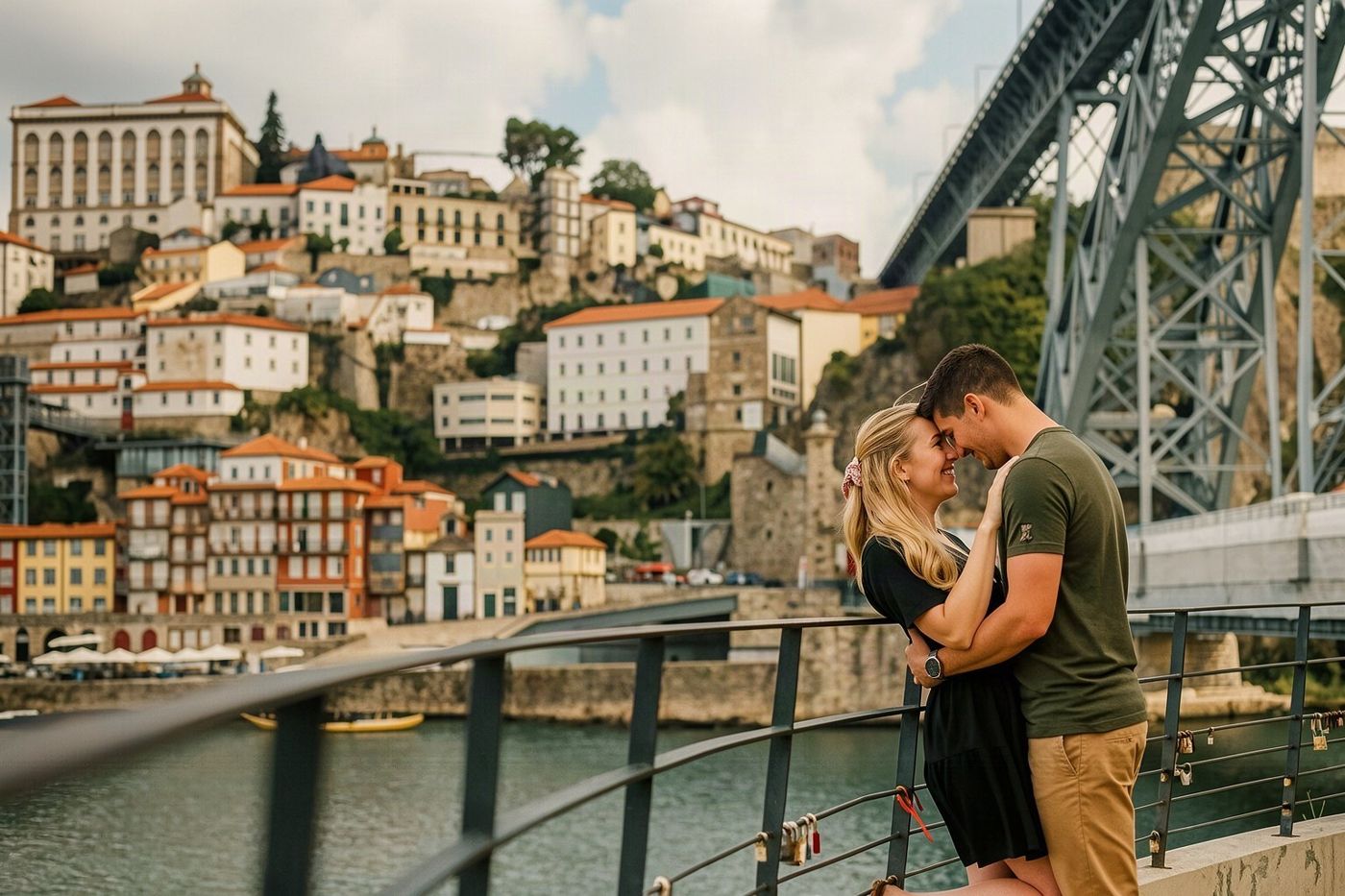 From the Gaia bank the light falls on the old town.
Groups
The mistake groups make is to turn up at the sights with ten people and no booking. Several places limit group sizes or run their own programmes.
Tours of the Casa da Música stop at 35 people, and the Bolsa, which can only be seen with a guide, caps its groups too. For 25 to 50 people, the Clérigos tower will open outside normal hours if asked. The Paiva Walkways give no group discount and have a daily limit.
For meals, 162 restaurants are good for groups and 136 of them take reservations; many recommend booking for dinner.
For beds, apartments are most of what is available in the centre, but few sleep six or more, so larger groups usually take two apartments near each other.
On the metro, ten matching singles bought together come with an eleventh ride free.
The Porto for groups guide covers restaurants, stays, activities and day trips for groups.
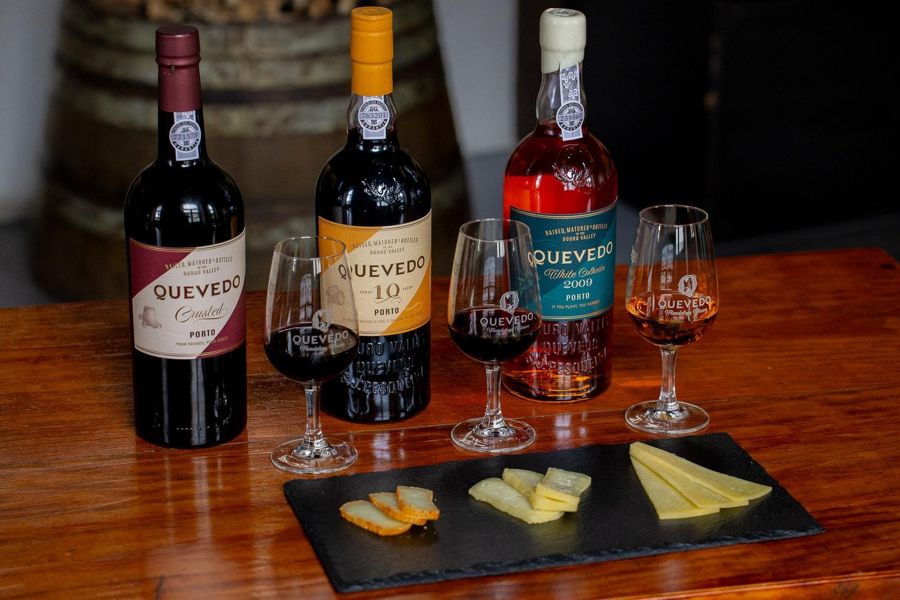
Vila Nova de Gaia: Port Wine Tasting with Cheese Pairing
★ 4.8 · 1,244 reviewsA one-hour Port tasting with cheese pairing in Vila Nova de Gaia, easy to fit into any kind of trip.
Wheelchair users and people with limited mobility
The mistake is to judge Porto by its postcards of steep lanes. The old town is hard, but a good part of the city is accessible, and the right base changes the trip.
The difficult areas are the Ribeira and the hillsides around it, where streets are steep and cobbled and many old buildings have no lift. Much easier are the metro network, where most stations have lifts and few steps, and the city's newer museums.
At the Torre dos Clérigos, visitors with a disability certificate of 60% or more enter free, and a companion pays half; the Clérigos ticket office sets out the conditions.
Of 554 restaurants across the city, 235 have a wheelchair-accessible entrance and 165 an accessible toilet. Among museums, 43 have an accessible entrance, including the Serralves museum, World of Discoveries and the FC Porto Museum, and 36 monuments, including the Palácio da Bolsa. Among parks, 18 have accessible entrances, among them the Palácio de Cristal gardens, the Parque da Cidade, the Jardim do Passeio Alegre and the Parque de Serralves.
Out of town, the Paiva Walkways are not adapted for reduced mobility, with steep slopes, many steps and three unpaved sections.
Choose a base close to a metro station, and use the metro and taxis for the climbs.
What changes, traveller by traveller
| Traveller | Watch out for | Worth knowing |
|---|---|---|
| Families | Cobbles and hills in the old town | Under 10 free at Clérigos; under 12 at the Bolsa |
| Couples | Sunset from the wrong bank | Jardim do Morro and Serra do Pilar open all hours |
| Solo | Pickpockets on metro line E and trams | 223 restaurants popular for solo dining |
| Groups | Group caps at the sights | Casa da Música tours up to 35 people |
| Limited mobility | Ribeira and hillsides | Metro largely step-free; Clérigos free at 60%+ |
| Wine travellers | Lodges and quintas are not the same | Quintas are about two hours upriver |
| Pilgrims | Distance to Santiago | About 233 km, 12-14 days |
- Watch out for
- Cobbles and hills in the old town
- Worth knowing
- Under 10 free at Clérigos; under 12 at the Bolsa
- Watch out for
- Sunset from the wrong bank
- Worth knowing
- Jardim do Morro and Serra do Pilar open all hours
- Watch out for
- Pickpockets on metro line E and trams
- Worth knowing
- 223 restaurants popular for solo dining
- Watch out for
- Group caps at the sights
- Worth knowing
- Casa da Música tours up to 35 people
- Watch out for
- Ribeira and hillsides
- Worth knowing
- Metro largely step-free; Clérigos free at 60%+
- Watch out for
- Lodges and quintas are not the same
- Worth knowing
- Quintas are about two hours upriver
- Watch out for
- Distance to Santiago
- Worth knowing
- About 233 km, 12-14 days
Wine travellers
The mistake is to think that a Port lodge visit in Gaia is a visit to the vineyards. The lodges are where Port is aged and blended, about 500 m from the Ribeira across the bridge; the quintas, the wine estates, are in the Douro Valley, about two hours upriver.
In Gaia, the houses offer visits from under an hour to longer tastings. In September 2026, Taylor's audio tour cost 25 euros with three Ports, Sandeman's basic visit 23 euros for 50 minutes, and its Old Tawnies Visit 53 euros. Graham's, in Gaia since 1890, guides every visit and ends with a tutored tasting with food.
For the vineyards, the Alto Douro Wine Region, a UNESCO site since 2001, was first demarcated in 1756, and the region has about 45,000 ha of vines. By rail, Régua and Pinhão are a little over two hours from São Bento. Read the listing before booking: a river cruise may carry no tasting at all, and no quinta is a walk from a railway station.
For a wine trip, spend at least one night in the valley, and give Mateus Palace's Wine & Vine visit, 33 euros with a tasting of the house wines, a place in the plan.
The Port wine guide explains the styles, and Douro Valley from Porto compares the ways to reach the vineyards.
- Children free at Clérigos
- Under 10
- Clérigos with a 60%+ disability certificate
- Free; companion half price
- Restaurants with accessible entrance
- 235 of 554
- Casa da Música tour group limit
- 35 people
- Douro vineyard area
- About 45,000 ha
- Pilgrims who started in Porto, 2023
- 46,280
Pilgrims on the Camino
Porto is not a waypoint for Camino walkers; on the Portuguese Way, more pilgrims set out from here than from anywhere else.
The central route from Porto to Santiago de Compostela is about 233 km, 608 km if started in Lisbon, a walk of roughly two weeks. Porto was the starting point for 46,280 pilgrims in 2023, more than one in ten of all Camino walkers that year.
The route passes through Ponte de Lima, a chartered town since the reign of Queen Teresa in the twelfth century. The stage from Barcelos to Ponte de Lima, 35 km, is one of the longest, and the next, to Rubiães, climbs 17 km over the Serra d'Arga.
Before setting off, give Porto a day or two.
At the end, coaches from Santiago back to Porto take 3 h 59 min to 5 hours with ALSA, and FlixBus runs the route too, so there is no need to walk back.
Visitors from outside the EU should remember that the walk counts towards their visa-free Schengen allowance, which covers Spain as well as Portugal; the EU home affairs site explains the Entry/Exit System in force since 10 April 2026.
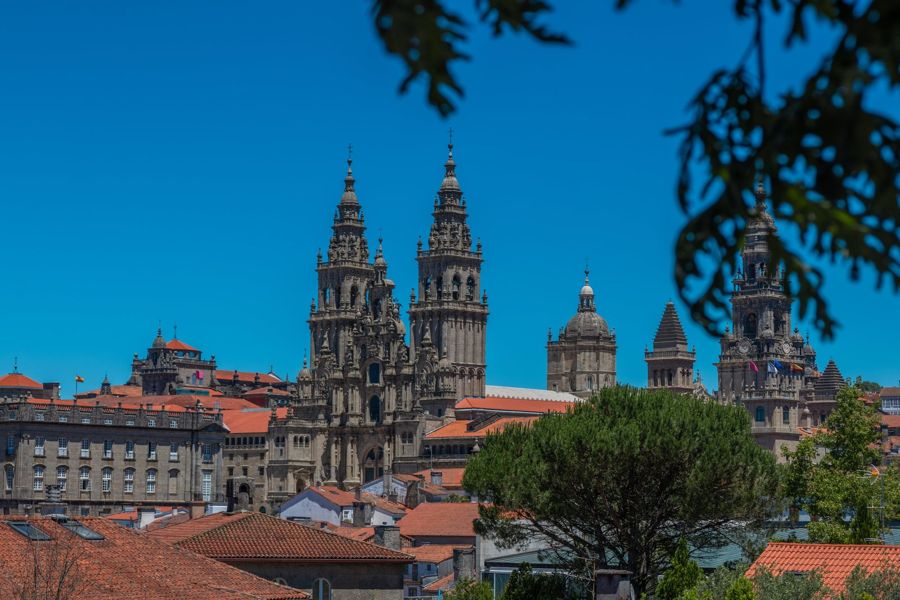
Santiago de Compostela Full-Day Tour From Porto
★ 4.7 · 1,206 reviewsA full day in Santiago de Compostela from Porto, for travellers who want the cathedral city without the walk.
Matching a plan to the traveller
With the style decided, choose the length. The itineraries section runs from half a day to more than ten days, and each plan can be adjusted with the notes above.
Families should take the one-day and two-day plans with the long climbs removed, using the cable car and the metro.
Couples will find the evenings of the one-day plan, in Gaia and the Baixa, are the part to protect.
Solo travellers can follow any plan, adding a walking tour on the first morning.
Groups should book the timed visits, such as the Bolsa and the lodges, before anything else.
Travellers with limited mobility should build each day around metro stations rather than the Ribeira.
Wine travellers should take the ten-day plan, with nights in the Douro.
Pilgrims need only a day or two before starting, and the half-day or one-day plan fits that well. Nightly tourist tax is set by the Porto municipality.
Common questions
Is Porto accessible for wheelchair users?
Partly. The Ribeira and the hillsides are hard, but the metro is largely step-free with lifts at most stations, and many museums, parks and restaurants have accessible entrances.
Is Porto good for solo travellers?
Yes. It is safe by European standards, with pickpocketing the main risk on metro line E and the historic trams, and eating alone is normal.
What is the difference between the Port lodges and the Douro quintas?
The lodges in Gaia, across the river from the Ribeira, age and blend Port; the quintas are wine estates in the Douro Valley, about two hours upriver.
How far is it from Porto to Santiago de Compostela on the Camino?
The central Portuguese Way from Porto is about 233 km and takes 12 to 14 days on foot, passing through Ponte de Lima.