Some links on this page are affiliate links: if you book through them, we may earn a commission at no extra cost to you. How this works
Most visits to Porto stay close to the old centre, and it is easy to forget that the city reaches the sea. Foz do Douro is where it does: the district at the mouth of the Douro, about 5 km west of the Avenida dos Aliados, where the river opens into the Atlantic.
It is a different Porto from the Ribeira. Foz was a town of its own until 1836, and its streets are known today for the well-off families who live there, the seafront promenade with its terraces and gardens, and a group of monuments that includes the first Renaissance buildings in the north of Portugal. The historic tram line 1 runs there along the river from the edge of the old town in about 20 minutes. The sections below cover what Foz is, its history, the Passeio Alegre and the seafront, eating, getting there, and who it suits as a half day out or a base.
Two ways to reach Foz under your own steam or on the water: a guided e-bike ride along the river, or a sail to the Atlantic.
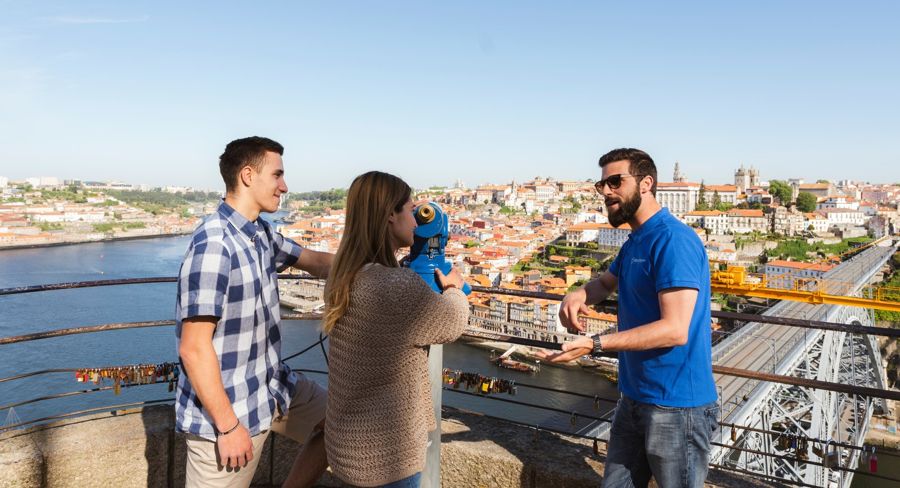 E-bike
Porto: Riverside Panoramic E-Bike Tour
Ribeira, Miragaia and Foz Velha by e-bike with a guide
 Sailboat
Porto: Charming Sailboat Cruise with Port Wine,Sunset Option
A sail from the Luís I bridge past the cellars and Foz to the Atlantic
A town by the sea that joined the city
The common mistake is to think of Foz as a beach suburb. It is an old place with its own history, and a town in its own right until 1836.
Foz do Douro was a town and municipality in its own right from 1833 to 1836, when it was joined to Porto. Its patron saint is São João, which is why it was long called São João da Foz. Today it belongs to the union parish of Aldoar, Foz do Douro and Nevogilde.
Its oldest core, Foz Velha, lies roughly between the Rua da Cerca and the Rua da Beneditina.
Foz is a mixed area, but it is best known as the home of the city's well-off, and its seafront promenade, with terraces, bars and gardens by the sea, draws people from across Porto.
It also has a literary history. The writer Raul Brandão was born here, and the poet Eugénio de Andrade and the painter Ângelo de Sousa were among those who lived in Foz. A monument to Raul Brandão stands 112 m from the Passeio Alegre.
For a visitor, Foz feels like a separate small town at the end of the river, which is exactly what it was.
Foz do Douro in dates
- São Miguel-o-Anjo chapel-lighthouse finished
- 1527
- Forte de São João Baptista begun
- 1570
- Town and municipality of its own
- 1833 to 1836
- Fort listed as of public interest
- 1967
- Passeio Alegre ensemble listed
- 1993
- Distance to the Aliados
- About 5 km
The first Renaissance in the north
The mistake is to walk past the old stone buildings at the river mouth without knowing what they are. Two of them hold a place in Portuguese architecture.
In the early 16th century, Bishop Miguel da Silva commissioned the Italian architect Francesco da Cremona to build a chapel-lighthouse dedicated to São Miguel-o-Anjo, at Cantareira, finished in 1527, and a church with an abbot's palace nearby. Together they are the first examples of Renaissance architecture in the north of Portugal.
The church and palace were later enclosed by the Forte de São João Baptista da Foz. The fort was begun in 1570, under King Sebastião, and enlarged after 1642, during the war to restore Portugal's independence. It commands the mouth of the Douro and has held heritage protection as a property of public interest since 1967.
Further north along the coast, at the end of the Avenida da Boavista, stands the Castelo do Queijo, the fort of São Francisco Xavier. The city built it during the same war, to a design by the French military engineer Michel de l'École, on a round granite rock said to look like a cheese, which gave it its popular name.
Near the Passeio Alegre, the tide gauge of Foz do Douro, 387 m away, is rated 4.6 from 144 reviews.
Places near the Passeio Alegre
| Place | Kind | Distance | Rating (reviews) |
|---|---|---|---|
| Jardim do Passeio Alegre | Garden | 0 m | 4.6 (14,875) |
| Parque Urbano da Pasteleira | Park | 1.1 km | 4.4 (1,549) |
| Tide gauge of Foz do Douro | Historical landmark | 387 m | 4.6 (144) |
| Museu do Porto, Reservatório | Museum | 824 m | 4.6 (158) |
| Jardim de Sobreiras | Park | 728 m | 4.6 (182) |
| O Sonho da Humanidade | Sculpture | 313 m | 4.5 (31) |
- Kind
- Garden
- Distance
- 0 m
- Rating (reviews)
- 4.6 (14,875)
- Kind
- Park
- Distance
- 1.1 km
- Rating (reviews)
- 4.4 (1,549)
- Kind
- Historical landmark
- Distance
- 387 m
- Rating (reviews)
- 4.6 (144)
- Kind
- Museum
- Distance
- 824 m
- Rating (reviews)
- 4.6 (158)
- Kind
- Park
- Distance
- 728 m
- Rating (reviews)
- 4.6 (182)
- Kind
- Sculpture
- Distance
- 313 m
- Rating (reviews)
- 4.5 (31)
The Passeio Alegre and the seafront
The mistake is to arrive at the tram stop and head straight for the sand. The garden at the end of the line is worth time of its own.
The Jardim do Passeio Alegre was designed by the landscape architect Émile David, and the Passeio Alegre ensemble around it has been listed as a property of public interest since 1993. It scores 4.6 out of 5 across 14,875 reviews and never closes.
From the garden, the seafront continues along the mouth of the river towards the ocean, with terraces and bars on the way. Nearby, the sculpture O Sonho da Humanidade stands 313 m away and the monument to Luís de Camões 973 m away.
Further inland, the Jardim de Sobreiras, 728 m away, is rated 4.6, and the Parque Urbano da Pasteleira, 1.1 km away, 4.4 from 1,549 reviews, open from 8 AM to 11 PM.
The Museu do Porto's Reservatório site, 824 m from the garden, is rated 4.6 from 158 reviews and was listed as closed on Mondays.
In June, the Avenida de D. Carlos I in Foz hosts one of the São João fairgrounds, open in 2026 from 9 June to 5 July.
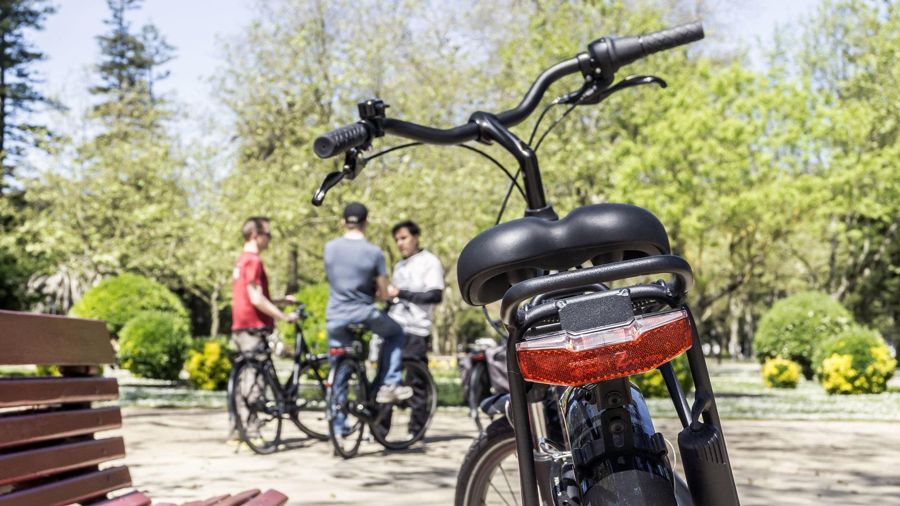
Porto Private E-Bike Tour: Douro River, Parks & Beaches
★ 4.8 · 117 reviewsA private three-hour e-bike tour along the Douro, through the parks and out to the beaches, with a local guide.
Eating in Foz
The mistake is to assume the seafront is lined with the city's best-reviewed restaurants. Within a kilometre of the Passeio Alegre, the choice is small, and the well-known names sit a little inland.
InDiferente, 958 m from the garden, is rated 4.9 out of 5 from 680 reviews, and was listed as closed on Mondays. Cafeína, 1.2 km away, is rated 4.5 from 1,676 reviews and opens for lunch from 12:30 PM to 3 PM and for dinner from 7:30 PM to 10:30 PM. The Pizza, 1.3 km away, is rated 4.6 from 194.
Towards the Avenida da Boavista, about 1.9 km away, the choice widens: Sài Gòn, a Vietnamese restaurant, is rated 4.8 from 381 reviews, Restaurante Eldorado 4.4 from 717, and Restaurante Flor de Lis by Vila Foz 4.5 from 463.
Several of them shut their kitchens in the afternoon, so a late lunch is worth confirming by phone.
For a coffee or a drink by the water, the seafront promenade has its terraces and bars.
Seafood lovers will find the most reviewed seafood houses in the city-wide restaurant rankings.
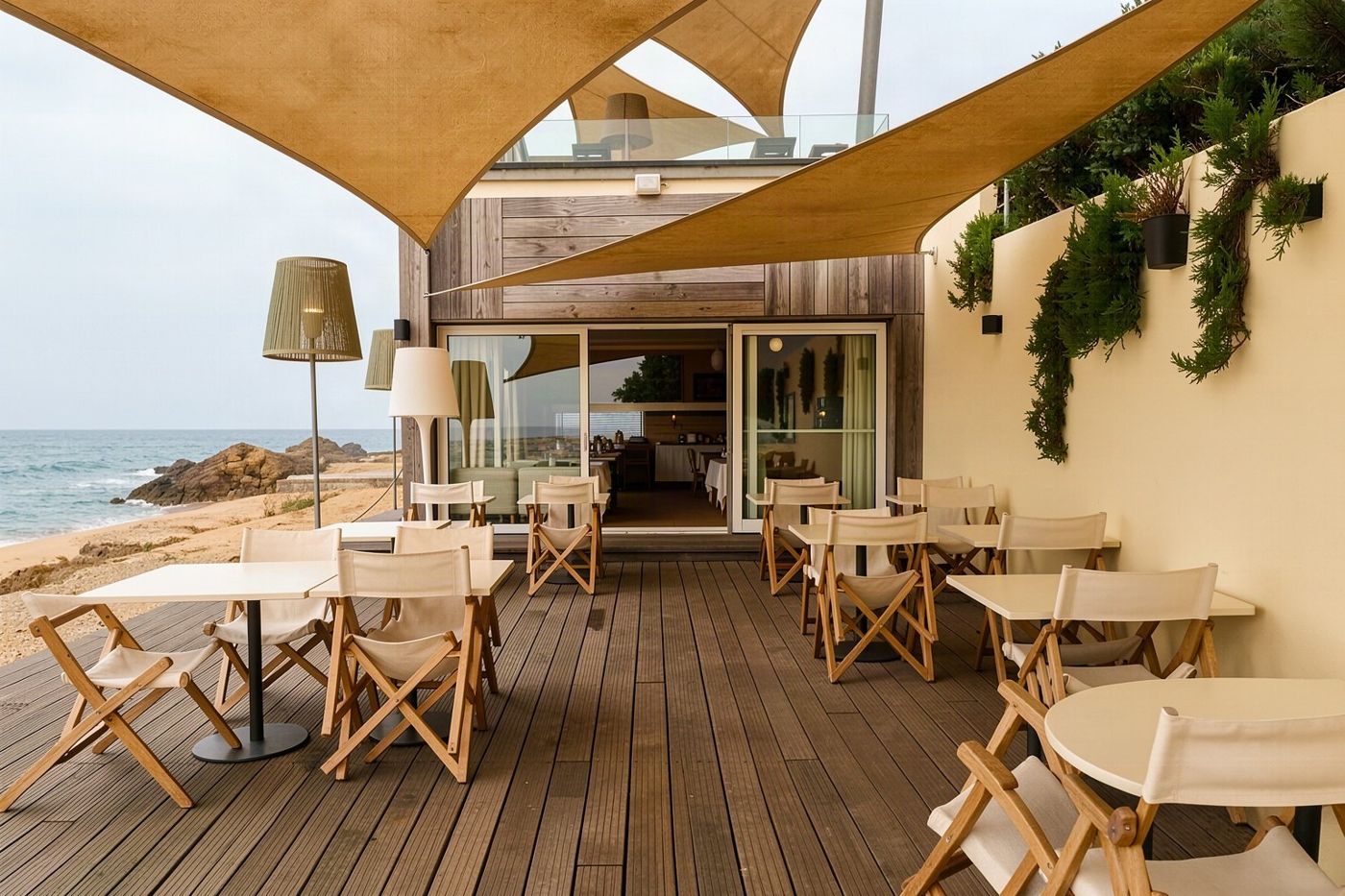 Within a kilometre of the Passeio Alegre the choice of tables is small.
Getting there
The mistake is to take a taxi without considering the tram, the classic way to Foz.
The historic tram line 1 runs along the river from Infante, at the western end of the Ribeira, to Passeio Alegre in about 20 minutes. Fares are bought on board and are separate from everything else: roughly 6 euros one way, 8 for a same-day return and 12 for two days of tram travel. None of the Andante tickets or passes covers it.
The trams are run by STCP, the city's bus and tram company. Andante tickets, priced by zone on the metro tariff, are the alternative for anyone returning by bus or metro.
On foot or by bike, the route along the river from the Ribeira to Foz is about 5 km.
A good half day combines the tram out in the morning, a walk through the Passeio Alegre and the fort, lunch inland, and the tram or a bus back.
Tram and Andante tickets are compared in getting around Porto.
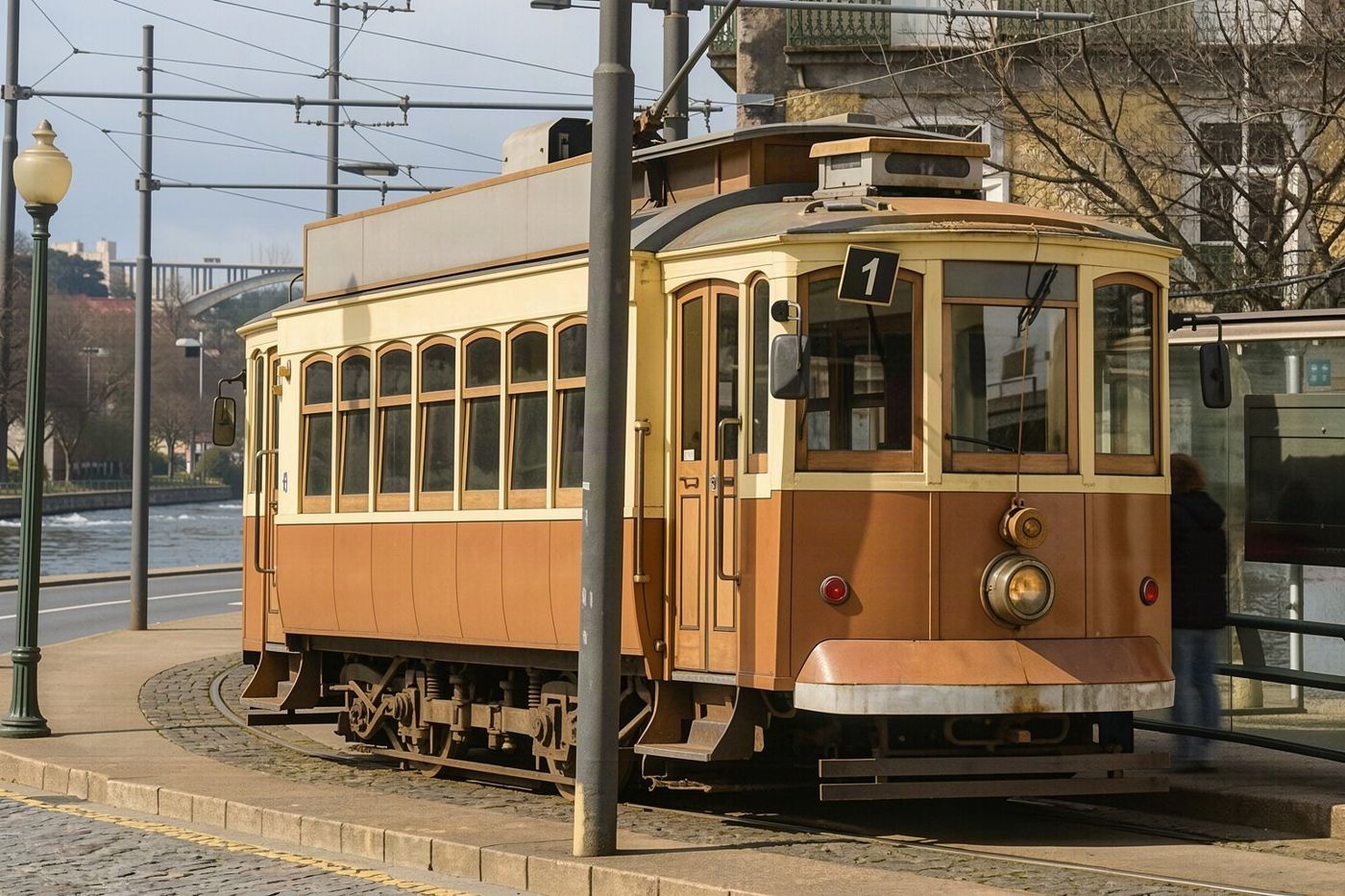 Tram line 1 runs from Infante along the river.
Staying in Foz
The mistake is to book a room in Foz for a first short visit to Porto expecting to walk to the sights. The old centre is about 5 km away, a tram or bus ride each way.
What Foz offers instead is the sea at the door, the promenade and a quieter, residential setting.
For a longer stay, or a second visit when the old centre has been seen, a base in Foz changes the rhythm of the trip: mornings by the sea and the tram into the city for the afternoon.
Bases across the city, from the Ribeira westwards, are compared in where to stay in Porto.
For a base closer to both the sea and the centre, Miragaia and Massarelos sit on the same riverside, halfway along the tram line.
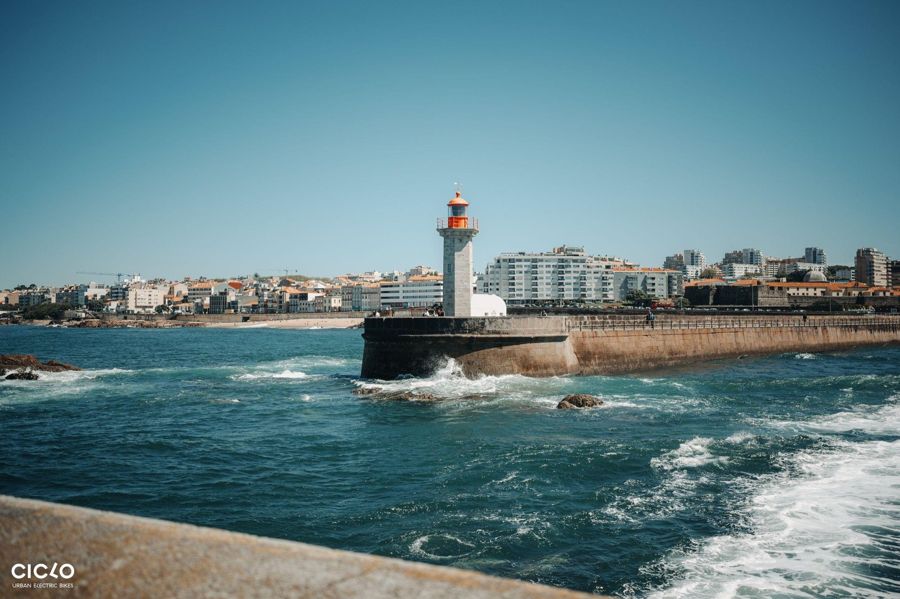
Porto Riverbank Tour on an e-bike: Atlantic Coast, Gardens
★ 4.8 · 12 reviewsA three-hour e-bike tour from the Atlantic coast through the gardens to the historic centre.
Who Foz suits
Travellers with a free half day get the most from Foz: the tram ride along the river, the garden and the fort at the mouth of the Douro, and the promenade.
It suits a longer stay or a second visit, when the old centre is familiar and a seaside rhythm appeals.
It suits families who want gardens and open space, with the Passeio Alegre and the parks inland.
It suits walkers and cyclists, since the river route from the Ribeira runs all the way.
A short first visit built on the old town's monuments is a poorer match, and anyone planning dinner out on a Monday at its best-reviewed restaurants.
If the monuments matter most, stay in the Ribeira or the Baixa; for the concert hall and Serralves, Boavista.
Common questions
How do I get to Foz do Douro from the centre of Porto?
Take the historic tram line 1 from Infante, at the western end of the Ribeira, to Passeio Alegre, about 20 minutes. It has its own fare, about 6 euros a single, paid on board.
How far is Foz from the centre?
About 5 km from the Avenida dos Aliados, along the river.
What is there to see in Foz do Douro?
The Jardim do Passeio Alegre, the Forte de São João Baptista at the mouth of the Douro, the Renaissance chapel-lighthouse of São Miguel-o-Anjo, the seafront promenade and, further north, the Castelo do Queijo.
Was Foz always part of Porto?
No. Foz do Douro was a town and municipality of its own from 1833 to 1836, when it joined the city.