Some links on this page are affiliate links: if you book through them, we may earn a commission at no extra cost to you. How this works
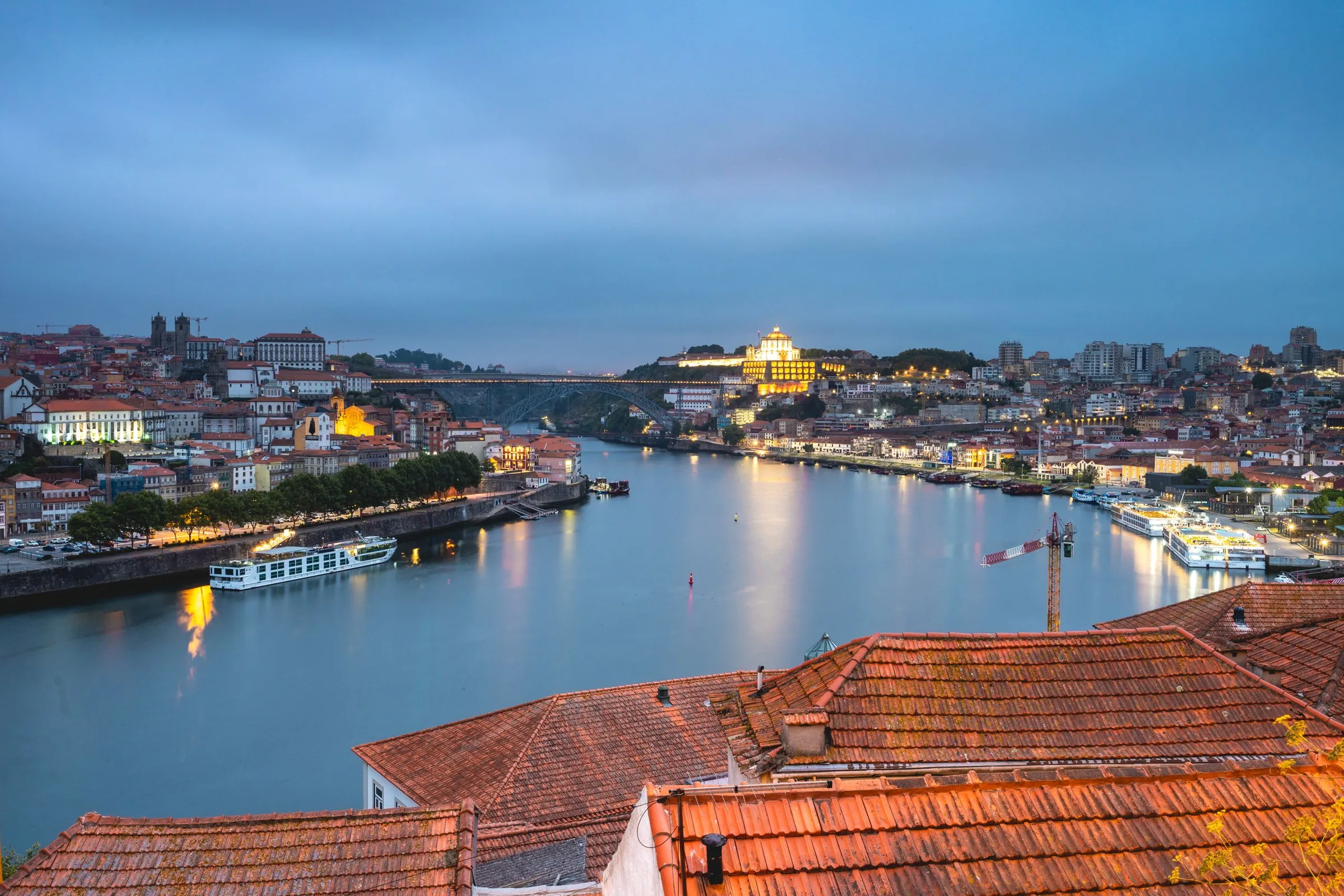
More than ten days in Porto is a different kind of trip. The city, the Douro and the northern day trips take about a week and a half, and anything longer turns the visit into a stay: time to settle into one neighbourhood, to go further afield, to Lisbon, Sintra or across the border to Santiago de Compostela, and to let the weather decide some days. For a stay that long, picking among the best months to visit Porto Portugal comes before any itinerary.
The month matters more than the route. The rain in Porto falls mostly between October and March, the festivals cluster between May and June, and the heat in the Douro peaks in July and August. So a long stay is planned in that order: the months first, then the pace of two weeks or more, then the longer journeys, each with its train or coach time, its fare and what has to be booked.
Two long days beyond the usual day-trip radius, with the transport arranged.
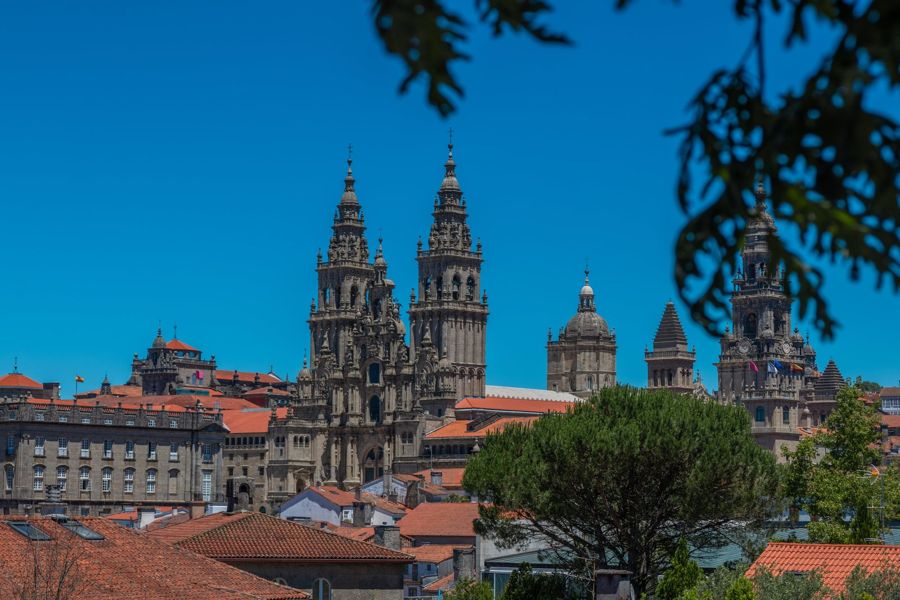 Spain
SpainSantiago de Compostela Full-Day Tour From Porto
Santiago's cathedral city across the border in a single day
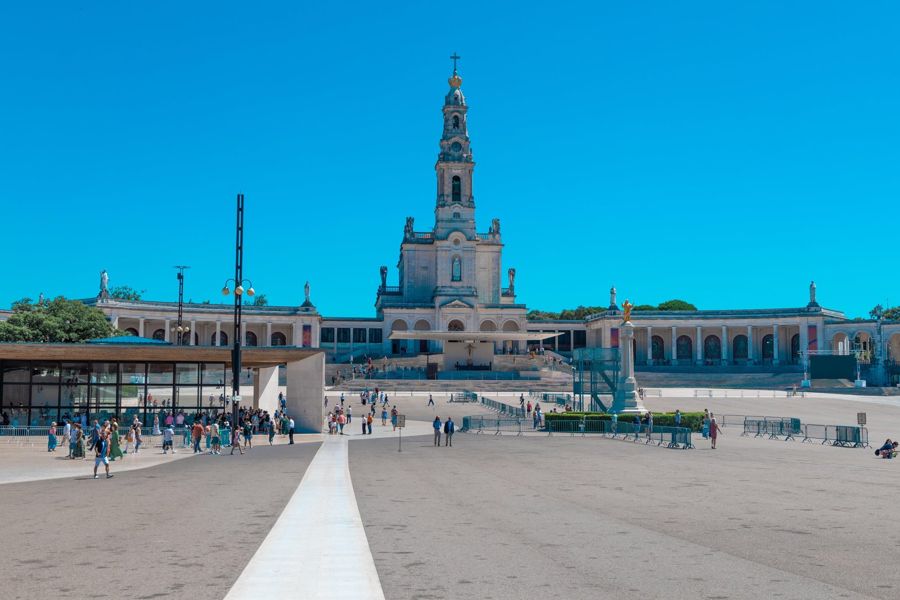 South
SouthFátima and Coimbra Full-Day Tour from Porto
The Fátima sanctuary and the university town of Coimbra
Choosing the month
The mistake is to pick the month for the temperature alone. In Porto, rain is the bigger variable.
The climate normals for Porto, measured at the Fontainhas station from 1981 to 2010, show a dry summer and a wet winter. The driest month, July, averages about 20 mm of rain and more than 300 hours of sun, with highs a little over 25 °C. December brings 181 mm and 124 hours of sunshine, with highs of 14.4 °C. November, at 172 mm, and October, at 158.3 mm, are nearly as wet. Across the year, 1,237 mm of rain falls.
For a long stay with day trips, the shoulder months are the balance. May has highs of 20.1 °C, 89.6 mm of rain and 258 hours of sun. June is warmer, at 23.5 °C, and drier, at 39.9 mm. September has highs of 24.1 °C and 71.9 mm of rain.
July and August are the driest and sunniest months in the city, and the hottest in the Douro, where the average July high at Régua reaches 31.5 °C.
Winter is the quietest season. January has highs of 13.8 °C and lows of 5.2 °C, and 147.1 mm of rain, so a winter stay needs indoor days built in.
The best time to visit Porto page goes through the seasons month by month.
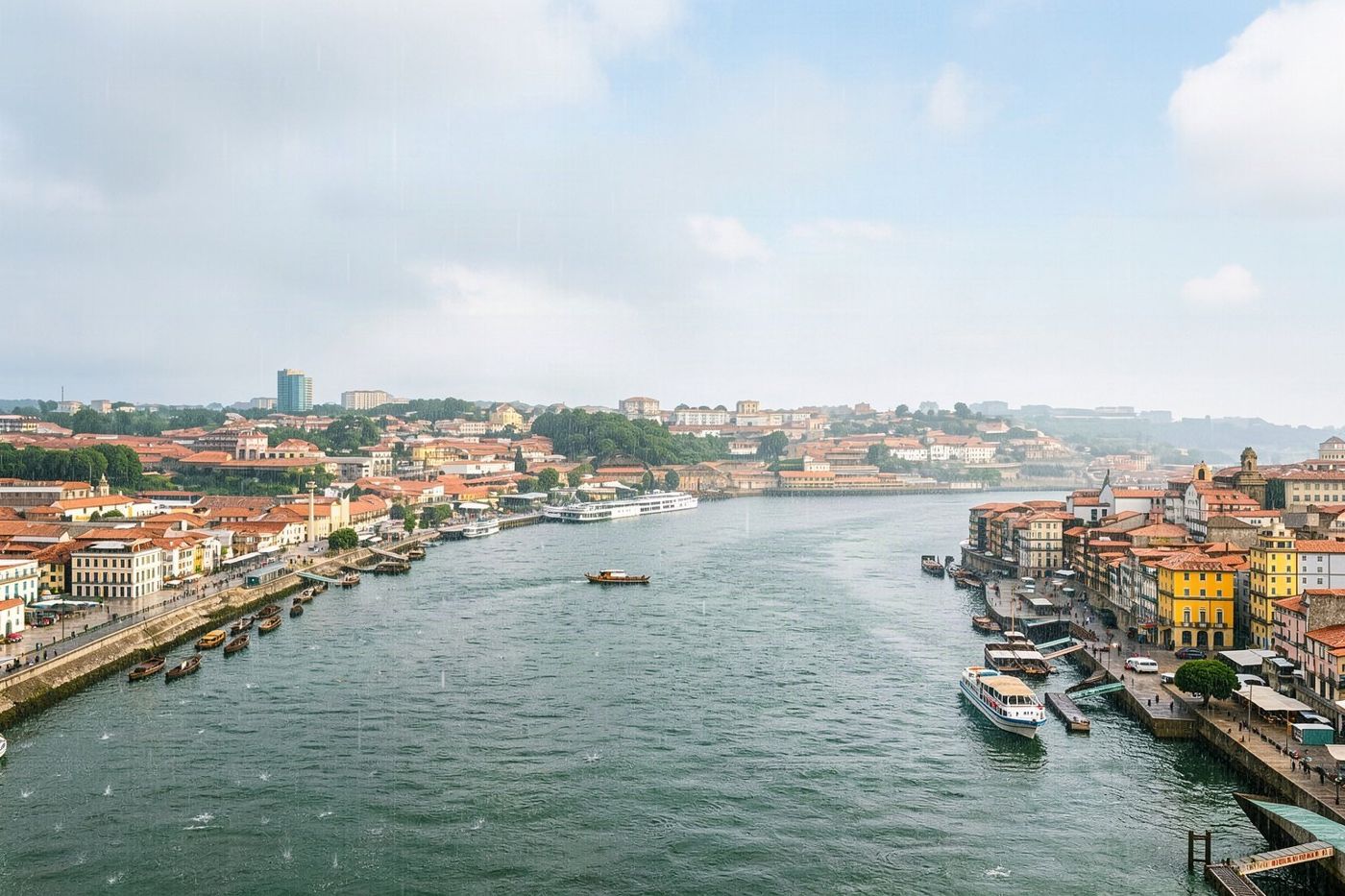 In Porto, rain is the bigger variable, not the temperature.
The festival calendar for a long stay
The mistake is to arrive a week after the event you would have planned the trip around. Porto's big dates are fixed early.
Late February to early March: Fantasporto, the international film festival, held at the Batalha Centro de Cinema; in 2026 it opened on 27 February and closed on 8 March.
The first full week of May: the Queima das Fitas, the students' festival, with nights of concerts beside the Parque da Cidade and an academic parade through the Baixa; the 2026 dates were 2 to 9 May.
Late May: Serralves em Festa, 50 hours without a break of music, theatre, dance and exhibitions in the Serralves park, with free entry; the 20th edition ran from 29 to 31 May 2026.
June: Primavera Sound Porto, with four days of concerts in the city park in 2026, 11 to 14 June.
The night of 23 to 24 June: São João, the city's own midsummer festival, with grilled sardines in the streets, plastic hammers, bonfires and fireworks over the river. The 24th is a municipal holiday.
December: the Christmas lights, and on 31 December a free concert on the Avenida dos Aliados with fireworks at midnight.
A stay of two weeks from late May to mid-June can catch Serralves em Festa, Primavera Sound and São João in a single trip.
The festivals section has each one in detail.
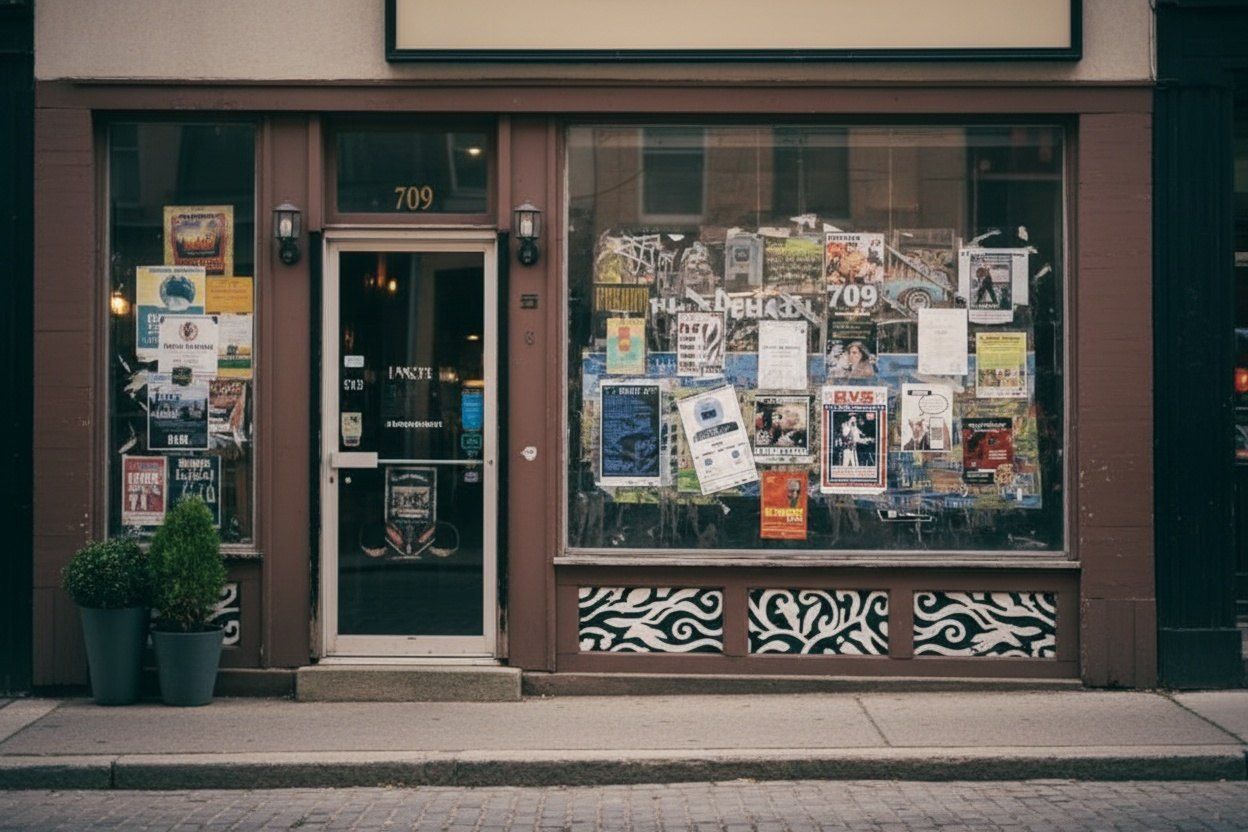 The city's big dates are fixed early in the year.
Lisbon and Sintra
The mistake is to do Lisbon as a day trip from Porto. The train takes about three hours each way.
The Alfa Pendular from Porto Campanhã reaches Lisbon in 2 h 58 min, and the Intercidades in about 3 h 23 min, with a train every hour or two. The standard single is 33.90 euros on the Alfa Pendular and 26.85 euros on the Intercidades; first class is 47.40 and 39.75 euros. Children and seniors travel at half price.
With more than ten days, give Lisbon at least two nights. The Jerónimos Monastery and the Belém Tower, inscribed together by UNESCO in 1983, are the historic core of a visit.
Sintra is about 40 minutes from Lisbon's Rossio station, with a train every 20 minutes. The Cultural Landscape of Sintra was inscribed by UNESCO in 1995. At the Park and Palace of Pena, built for King Ferdinand II, the essential adult ticket costs 20 euros and the park alone 12 euros; the park opens from 9:00 to 19:00 and the palace from 9:30 to 18:30, and palace entry is at a booked date and time. Private cars cannot drive up to Pena from the historic centre.
Monserrate, another palace and park, costs 12 euros; its roof is under scaffolding for restoration until early 2027.
On the way back north, Coimbra is on the same line, 1 h 09 min from Porto on the Alfa Pendular, and makes a natural overnight stop.
From Porto: Douro Valley w/ Boat Tour, Wine Tasting & Lunch
★ 4.7 · 21,807 reviewsThe Douro with a boat trip, a wine tasting and lunch, the one trip no long stay in Porto should skip.
Santiago de Compostela and the Camino
The mistake is to think of Santiago as far. It is across a border, but inside the Schengen area and about 193 km by road.
ALSA coaches run from Porto to Santiago de Compostela in 3 h 59 min to 5 hours, and FlixBus runs the route too. Fares on early bookings can be low, and they rise with demand. The border crossed on the way lies inside the Schengen area.
For a long stay, Santiago works best as an overnight trip. A single day there and back spends eight or more hours on the coach.
Porto is also the most popular starting point on the Portuguese Way of the Camino de Santiago. The central route from Porto is about 233 km and takes 12 to 14 days on foot, passing through Ponte de Lima; in 2023, 46,280 pilgrims started in Porto, 10.9% of all the pilgrims on every Camino route that year. Barcelos to Ponte de Lima, at 35 km, is one of the longest stages.
A stay of three weeks or more can include walking the Camino itself, with Porto as the start and Santiago as the end, and a return by coach.
For readers from the UK, the US, Canada or Australia, the stay counts towards the 90 days in any 180 allowed without a visa across the Schengen area, which includes both Portugal and Spain. Since 10 April 2026, the Entry/Exit System registers each entry with biometrics instead of passport stamps, as the European Commission's home affairs site explains, and ETIAS is expected to start in the last quarter of 2026.
Longer journeys from Porto
| Destination | Transport | Time | Fare |
|---|---|---|---|
| Lisbon | Alfa Pendular from Campanhã | 2 h 58 min | 33.90 EUR standard |
| Lisbon | Intercidades | About 3 h 23 min | 26.85 EUR standard |
| Sintra | Train from Lisbon Rossio | About 40 min | Every 20 min |
| Santiago de Compostela | ALSA coach | 3 h 59 min to 5 h | Varies with demand |
| Fátima | Rede Expressos coach | 2 h to 2 h 20 min | Varies with demand |
| Coimbra-B | Alfa Pendular | 1 h 09 min | 19.70 EUR standard |
- Transport
- Alfa Pendular from Campanhã
- Time
- 2 h 58 min
- Fare
- 33.90 EUR standard
- Transport
- Intercidades
- Time
- About 3 h 23 min
- Fare
- 26.85 EUR standard
- Transport
- Train from Lisbon Rossio
- Time
- About 40 min
- Fare
- Every 20 min
- Transport
- ALSA coach
- Time
- 3 h 59 min to 5 h
- Fare
- Varies with demand
- Transport
- Rede Expressos coach
- Time
- 2 h to 2 h 20 min
- Fare
- Varies with demand
- Transport
- Alfa Pendular
- Time
- 1 h 09 min
- Fare
- 19.70 EUR standard
Fátima, Nazaré and Óbidos
The mistake is to see three towns in one day from Porto. Fátima, Nazaré and Óbidos are to the south, and a day that claims all three is mostly spent on a bus.
Fátima is 2 h to 2 h 20 min from Porto by Rede Expressos coach, about 173 km, with many departures a day. The first reported apparition at the Cova da Iria was on 13 May 1917, and about 4 million pilgrims visit each year. On 13 May and 13 October, the main pilgrimage days, crowds approach a million: go on those dates for the event, avoid them for a quiet visit.
Nazaré, 142 minutes by road from Porto, is known for the giant waves of Praia do Norte, driven by an undersea canyon offshore; big-wave surfing began there in 2010. A funicular opened in 1889 climbs about 318 m from the beach to the Sítio, in a three-minute ride, for about 2.50 euros single.
Óbidos, 238 km by road from Porto and about 80 km from Lisbon, is a walled town whose walls can be walked. Its local drink is ginjinha, a sour cherry liqueur served in a small chocolate cup, and it has been a UNESCO Creative City of Literature since 2015. Its railway station lies outside the walls, 10 to 15 minutes uphill on foot.
The simplest way to see them is on the way between Porto and Lisbon, with a car and a night on the coast.
- Driest month in Porto
- July, 20.4 mm
- Wettest month in Porto
- December, 181 mm
- Tourist tax cap
- 7 nights, 21 EUR
- Porto to Santiago on foot
- About 233 km, 12-14 days
- Pena Palace essential ticket
- 20 EUR
- Schengen stay without a visa
- 90 days in any 180
Pacing a long stay in Porto
The mistake is to keep up the pace of a short trip. Past ten days, a stay needs empty days.
Stay in one neighbourhood rather than the busiest streets. Cedofeita, with Rua de Miguel Bombarda and its galleries, and Bonfim, east of the centre, are quieter bases within walking distance of the Baixa. The neighbourhoods guide compares them.
Work in blocks. Three or four days in the city, then two days out, then a rest day, then a longer trip with a night away. The Douro, Lisbon and Santiago are all better with at least one night.
Use transport passes for the busy weeks. For a busy week of city sightseeing, a 72-hour Andante Tour card covers every journey on the Andante network; it includes no museums.
Budget the tourist tax once. The city's nightly charge of 3 euros a head stops after the seventh night, so the most anyone pays per stay is 21 euros; children under 13 are exempt. The Porto municipality sets it.
Leave the rainy days for museums. A wet morning suits the national art museum in the Carrancas palace (shut on Mondays), the Serralves galleries or a guided tour of the Bolsa.
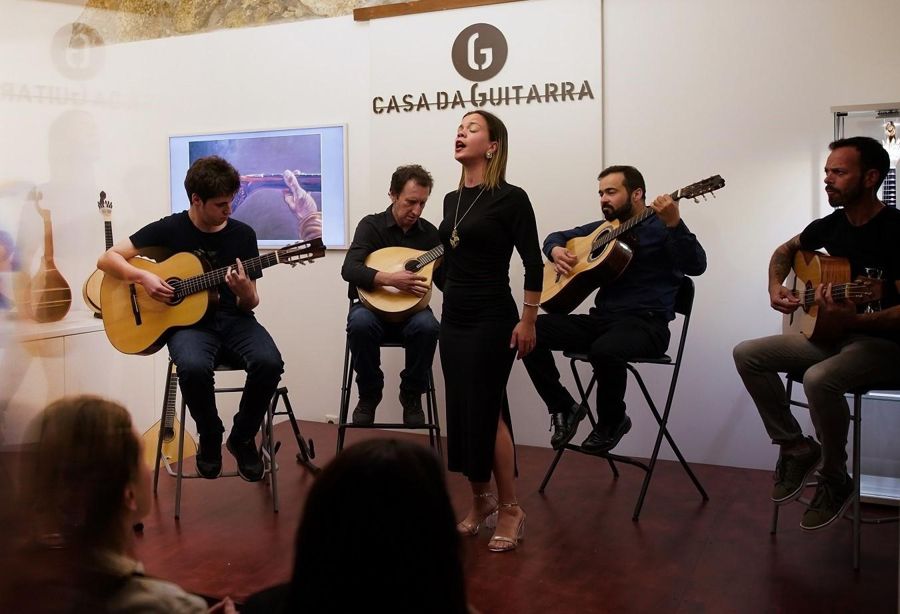
Porto: Intimate Live Fado at Casa da Guitarra and Port Wine
★ 4.8 · 3,027 reviewsAn hour of intimate live fado at Casa da Guitarra with a glass of Port, for a quiet evening in the city.
A two-week outline
Days one to three: the old centre and Gaia first, then the western side of the city down to Foz.
Days four to six: the Douro, with nights in Régua or Pinhão, and Lamego and Mateus Palace. The ten-day plan sets this out.
Day seven: rest in Porto.
Days eight and nine: Guimarães and Braga, then Viana do Castelo, by train.
Days ten to twelve: south by train to Coimbra for a night, then Lisbon for two nights, with Sintra as a day from Lisbon.
Day thirteen: back to Porto on the Alfa Pendular.
Day fourteen: a last slow day, or Aveiro.
For three weeks, add Santiago de Compostela for two nights by coach, and the Minho coast and the Paiva Walkways by car.
Choose the months first. May, June and September give the best balance of dry days and moderate heat for this much travel.
Common questions
What is the driest time of year in Porto?
July and August. July averages 20.4 mm of rain and August 32.9 mm, against 181 mm in December, on the 1981-2010 normals for Porto.
Can I visit Lisbon from Porto in a day?
It is possible but tiring: the Alfa Pendular takes 2 h 58 min each way. On a long stay, give Lisbon at least two nights and see Sintra from there.
How do I get from Porto to Santiago de Compostela?
ALSA coaches take 3 h 59 min to 5 hours, and FlixBus also runs the route. On foot, the central Portuguese Way is about 233 km and 12 to 14 days.
Is the Porto tourist tax charged for a long stay?
Only for the first seven nights: 3 euros per person per night, capped at 21 euros per stay. Children under 13 are exempt.